
What Twelve Years of Scrubbing Floors Taught Me About Real Cleaning
 McCarthy James2026-08-18
You know, a lot of you have been asking if we could get Daniel on the blog. He's one of our go-to guys when it comes to cleaning, especially helping people figure out the absolute best way to tackle their spaces. We've mentioned it before, but seriously, our team members have seen it all. They've been in the cleaning business for ages, and the advice they offer really does make a difference. It’s not just about keeping things tidy day-to-day, but also about steering you clear of common mistakes that could end up causing more harm than good when you're trying to do it yourself. So, today, we’ve managed to get Daniel to sit down with us. He’s going to walk us through what he thinks should be your absolute top priority when you’re planning a clean. It’s about getting the foundations right, you know?
My name is Daniel Kowalski, and I've been cleaning other people's homes and offices for a living since I was twenty-three. These days I run a crew for Magical Cleaning, a professional cleaning company working across Kilkenny, Portlaoise, Waterford, Carlow and Tipperary. People often assume cleaning is cleaning - you grab a mop, a bit of spray, and off you go. I used to think that too, before I actually learned the trade. I want to tell you what I've picked up over the years, because I think most people genuinely don't know how different professional cleaning is from doing it yourself on a Saturday afternoon.
The Illusion of "Clean"
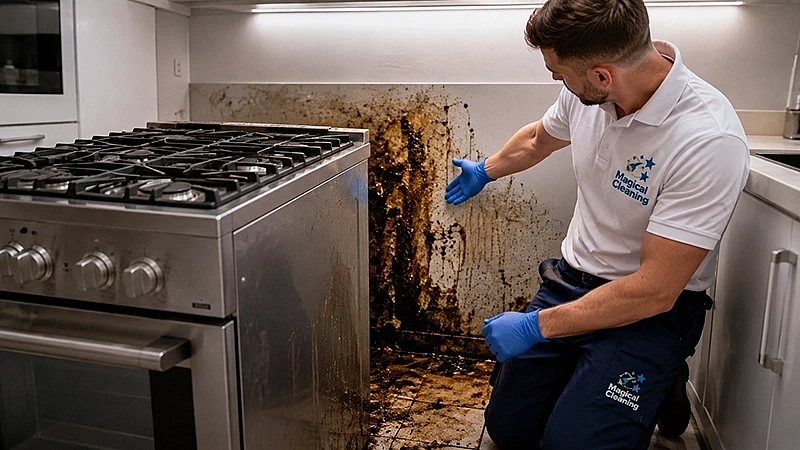
Here's something that surprises almost every client the first time we walk into their house: a room can look spotless and still be filthy. Surfaces that shine under a lamp can be crawling with bacteria, dust mites, mould spores, and grease residue that's invisible to the naked eye. When you wipe a kitchen counter with a damp cloth, you're mostly just moving dirt around and diluting it slightly. It looks better, sure. But looking better and being properly clean are two very different things, and that gap is basically the whole reason companies like ours exist.
When my team does a general cleaning job, we're not just tidying visible mess. We're working through a logic of layers - dust settles on top of grease, grease settles on top of older grime, and each layer needs a different approach to actually lift it rather than smear it further into the surface. A domestic cleaner without training will often use the same all-purpose spray on a bathroom tile, a wooden shelf, and a stainless steel fridge. We won't, because each of those surfaces reacts differently to pH, to abrasiveness, to heat, and to moisture, and using the wrong product can permanently damage a surface even while it looks fine in the moment.
Construction Dust Is Its Own Beast: please don’t ignore this
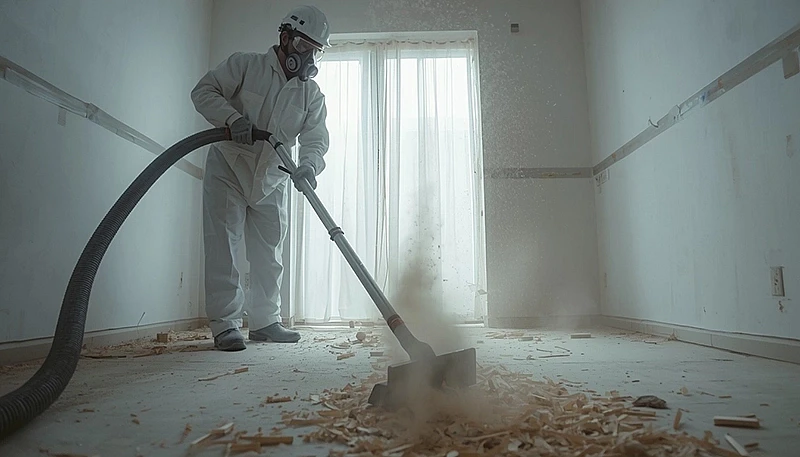
Cleaning up after construction is probably the job that convinces skeptical clients the fastest that professional cleaning is worth paying for. After a renovation, a room isn't just dusty - it's coated in fine particulate that gets into every crack, vent, and fabric fibre in the space. Ordinary vacuum cleaners actually make this worse in some cases, because their filters aren't fine enough to trap construction dust, so the machine just recirculates it back into the air through the exhaust.
We use HEPA-filtered vacuums specifically for this reason, because they capture particles down to a fraction of a micron instead of blowing them straight back out. We also work in a particular sequence - ceilings and light fixtures first, then walls, then surfaces, then floors last - because gravity is not your friend if you clean in the wrong order. I've walked into homes where someone tried to do this themselves, vacuumed the floor first, and then spent the next hour watching new dust settle right back down onto it from the walls and ceiling they hadn't touched yet. It's not a lack of effort on their part. It's just not something you'd know unless you'd done this job a hundred times.
There's also the matter of what's actually in construction dust - plaster particles, sometimes traces of paint, adhesive residue, wood fibres, silica dust from cutting tile or concrete. Some of that isn't just annoying, it's genuinely something you don't want to be breathing in repeatedly, which is another reason we wear proper respiratory protection on these jobs even when a homeowner might not think twice about it themselves.
Furniture Deserves More Respect Than It Gets
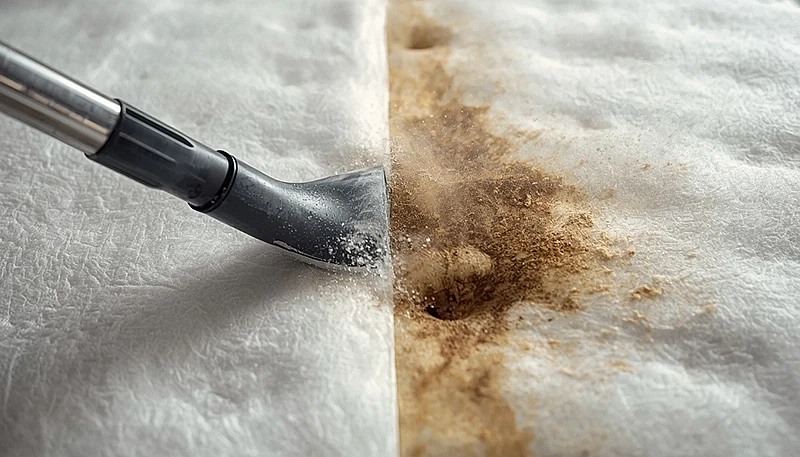
Dry cleaning of furniture is probably the service people understand least, and I get it - most of us grew up thinking of dry cleaning as something that happens to a suit at a shop with a rack of plastic-wrapped hangers. But upholstered furniture absorbs everything that touches it over years: skin oils, spilled drinks, pet dander, dust that's worked its way deep into the padding. Regular vacuuming only ever gets the surface layer.
We use low-moisture cleaning methods for most upholstery, because soaking fabric with water and household cleaner is a genuine risk - it can cause shrinkage, colour bleeding, or worse, mould growth inside the cushion filling that you won't discover until it starts to smell weeks later. Instead we rely on specialised extraction equipment and solvent-based or encapsulation cleaning agents matched to the specific fabric type. Velvet, leather, linen, and synthetic blends all need to be read correctly before you even start, because the wrong product on the wrong material can leave a stain that's far worse than what you started with. I've seen people try to fix a coffee spill with a kitchen cleaning spray and end up with a bleached patch that's permanent. That's the kind of mistake that's genuinely hard to undo.
Commercial Spaces Play by Different Rules
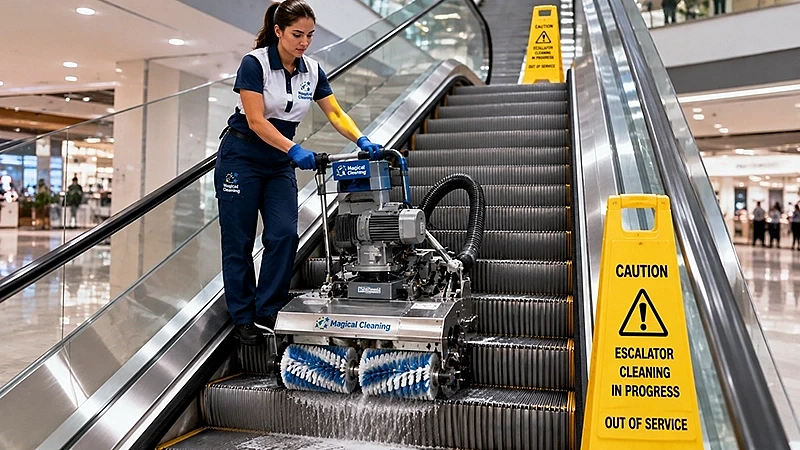
When you're dealing with commercial cleaning, it's a whole different ballgame compared to, say, a residential house. The scale of it is just bigger, for starters. Think about it, you're not just cleaning one or two rooms; you're responsible for entire office buildings, retail spaces, or even larger facilities. And the pressure is on because these places are under constant scrutiny, not just from us cleaning pros, but from everyone who walks through the door.
Imagine customers, clients, or even employees coming in first thing in the morning. They expect everything to look spotless, right? They don't see the work that goes into making it happen – the late nights, the early mornings, the detailed checklists. They just see the result. So, the challenge is to maintain that consistent level of cleanliness, day in and day out, without causing any hiccups for the people who actually work or shop there.
This means a lot of careful planning goes into the scheduling. You can't just waltz in with your mops and buckets during peak business hours. You've got to work around the needs of the business, often scheduling cleaning for after closing or before opening. Then there's the equipment. You need tools that are efficient but also quiet. Nobody wants their workday interrupted by a loud vacuum cleaner or a noisy floor buffer, especially if they're trying to concentrate on their tasks. It’s about being efficient without being intrusive.
And it's not just about speed; it's about thoroughness. When you're tackling a large commercial space, it’s easy for things to slip through the cracks if you're not organized. So, the process has to be methodical. Every corner, every surface, every high-traffic area needs attention. You have to develop a system, a routine that ensures nothing is missed, even when you're moving through a vast area trying to get the job done within a specific timeframe. It’s a balancing act between covering a lot of ground and ensuring every bit of it is properly cleaned.
There's also a hygiene standard in commercial settings that's simply higher than most homes need. Shared surfaces - door handles, reception counters, shared kitchens, bathrooms used by dozens of people a day - need proper disinfection, not just a wipe-down, because they're a genuine vector for spreading illness through a workplace. We follow a rotation of cleaning agents and contact times that actually kill pathogens rather than just making a surface smell fresh, which is a distinction most people never think about until someone explains it to them.
The Equipment Actually Matters: that is the key point
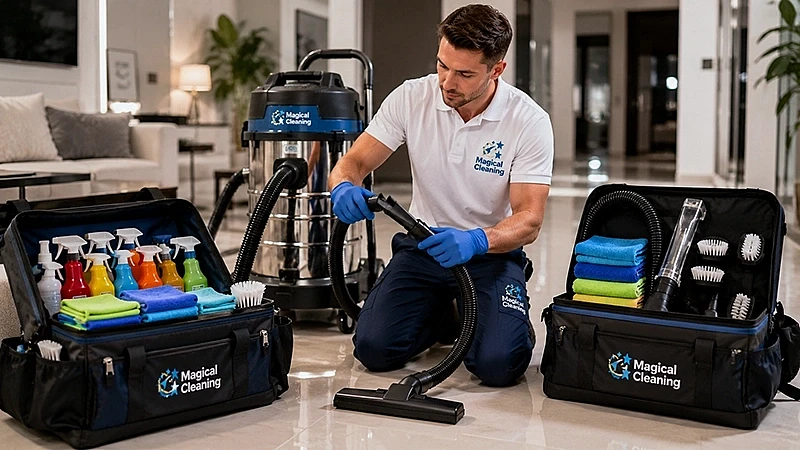
I think the biggest misconception people have is that the difference between us and them is just experience, when honestly the equipment matters just as much. A domestic vacuum and a commercial-grade HEPA unit are not doing the same job even if they look similar from across the room. Industrial extractors for carpets and upholstery pull far more moisture and embedded dirt out than any rental machine you'd get from a supermarket. Our chemical range isn't one bottle that claims to do everything - it's a set of pH-balanced, surface-specific products, from alkaline degreasers for kitchens to acidic descalers for hard water buildup to neutral cleaners for natural stone that would otherwise etch under anything harsher.
None of this is about making the job sound more complicated than it needs to be. It's genuinely just what it takes to get a result that lasts rather than one that looks fine for a day and then reverts back once the surface reabsorbs whatever wasn't actually removed the first time.
Customers choose Magical Cleaning and keep coming back

At the end of the day, most of our clients aren't hiring us because they couldn't clean at all. They're hiring us because a proper clean takes the right tools, the right products for each surface, and the kind of pattern recognition that only comes from doing this job over and over. Whether it's a house in Kilkenny after a family renovation, an office in Portlaoise that needs to stay presentable five days a week, or a sofa in Waterford that's seen a decade of daily use, the underlying truth is the same - clean isn't really about effort. It's about knowing what you're looking at and treating it the right way. That's the whole job, really, and it's why I still enjoy doing it after all these years.
You know, over time, the people who keep coming back to us, the ones who make this a regular thing, they start to feel less like just customers and more like… well, friends. And you know how it is with friends, sometimes it’s genuinely tough to put into words exactly what you’ve been through, to really paint a picture of an experience. So today, I thought, why not bring in some of those familiar faces? I sat down with three of our regulars, folks who’ve been with us for a while, and I asked them to just open up, to really share their stories, to go into detail about what using Magical Cleaning has actually been like for them.
Sean Byrne, Kilkenny
General Cleaning
"I'd been putting off a deep clean of my house for months - between work and two kids, it just never happened. I called Magical Cleaning on a bit of a whim and honestly wasn't expecting much more than a quick tidy-up. What I got was completely different. The two women who came out went through every room properly - skirting boards, behind the radiators, inside the microwave, places I genuinely forget exist. My kitchen counters actually feel clean now, not just wiped. They also didn't just spray the same bottle on everything, which I appreciated once I noticed it - different products for the bathroom tiles versus the wooden table. Small thing, but it told me they knew what they were doing. Booking again for next month, no question."
Mary Sullivan, Portlaoise
Cleaning Up After Construction
"We finished a kitchen extension in July and the dust situation was honestly worse than I expected - it was everywhere, on top of cupboards, inside drawers, even in the hallway carpet two rooms away. My wife and I tried vacuuming it ourselves first and it felt like we were barely making a dent, and the air still felt gritty afterwards. Called Magical Cleaning and the difference was night and day. They came with proper filtered vacuums and worked top to bottom - ceiling fixtures and vents first, then walls, then floors last, which apparently is the right order and explained why our attempt hadn't worked. Took them about four hours and the house genuinely felt breathable again by the time they left. Worth every cent, especially after builders leave and you're just staring at a layer of grey dust on everything."
Kene Allbright, Waterford
Dry Cleaning of Furniture
"My cream sofa had seen better days - years of daily use, a couple of red wine incidents I'd tried and failed to fix myself with kitchen sprays, general greying from just being sat on every evening. I was half convinced it needed replacing. Booked Magical Cleaning for the dry cleaning service more out of curiosity than confidence. The technician actually asked about the fabric type before starting, which I hadn't thought mattered until he explained why it does. He used some kind of low-moisture method rather than soaking it, and I watched years of grime lift out without the fabric getting damp the way it did when I'd tried steam cleaning myself. The wine stain is basically gone and the colour looks even again across the whole thing. My sofa looks like it did the day we bought it. Genuinely didn't think that was possible anymore."
