
The Ultimate Guide to Spring Cleaning: How to Help a Housewife Achieve a Deep, Professional Clean
 Lawler Mike2026-08-10
Let's be honest - keeping a home clean is a never-ending job. You wipe down counters, vacuum the floors, and tidy up the living room, and somehow, within a few days, everything looks like it needs doing all over again. But there's a big difference between the kind of cleaning you do every week and the kind of deep, transformative cleaning that makes your home feel truly fresh and renewed.
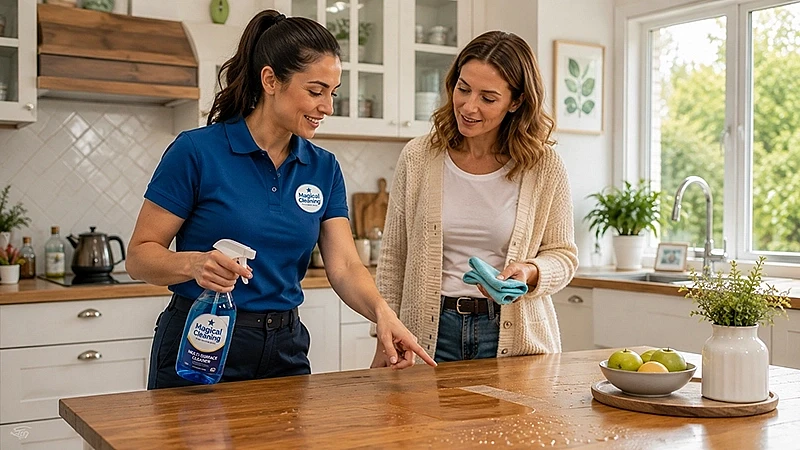
Deep cleaning isn't just about making things look nice. It's about getting into all those forgotten corners, tackling the grime that's been building up for months, and creating an environment that actually feels healthy and peaceful to live in. It's the difference between a home that looks clean and a home that is clean.
At Magical Cleaning, we've spent years perfecting the art of deep cleaning. We've learned what works, what doesn't, and how to approach each room in a way that delivers professional-grade results. In this guide, we're sharing all of that knowledge with you. Whether you're planning to tackle the job yourself or you're curious about what professional cleaners actually do, you'll find everything you need to know right here.
Part 1: Understanding What Deep Cleaning Really Means
The Difference Between Regular and Deep Cleaning
Think of regular cleaning like brushing your teeth. It's that daily essential stuff that just keeps things from getting out of hand. Deep cleaning, though, that's more like your annual dentist visit for a thorough professional scrub. It really gets into the nooks and crannies your everyday routine just can't touch.
When you do your regular wipe-downs and vacuuming, you're keeping things looking neat on the surface. But a deep clean means getting serious. You're pulling out the furniture to clean behind it, scrubbing the grime out of tile grout, washing curtains, and hitting those dusty cabinet tops. It’s all those often-ignored spots you see but never quite get to.
And honestly, the result is a big change. After a proper deep clean, your place just feels… better. It smells cleaner, looks brighter, and somehow feels bigger and more relaxing. Plus, keeping it that way afterward becomes so much less of a chore.
The Health Benefits You Might Not Have Considered
You might not think about it much, but a really thorough cleaning does more than just make a place look tidy. It can actually be good for your health and how you feel overall. When you get rid of dust, mold, and all those allergy triggers that build up, you're making your living space healthier for whoever's in it.
If allergies are a problem for you, you'll probably notice a big change after a deep clean. Taking dust mites out of your bedding, really getting into the upholstery with the vacuum, and cleaning out the air vents can make a noticeable difference in how bad your symptoms get. And even if nobody in the house has allergies, just breathing cleaner air is always a plus.
Then there's the mental side of things. Having a clean, organized home can cut down on stress and help you feel more at ease. When there's clutter and mess, it can create this low-level, persistent feeling of anxiety. Getting rid of that might help you sleep better, concentrate more easily, and generally just feel more comfortable in your own space.
Part 2: Planning Your Deep Clean - Because Wingin' It Never Works
How to Set Yourself Up for Success
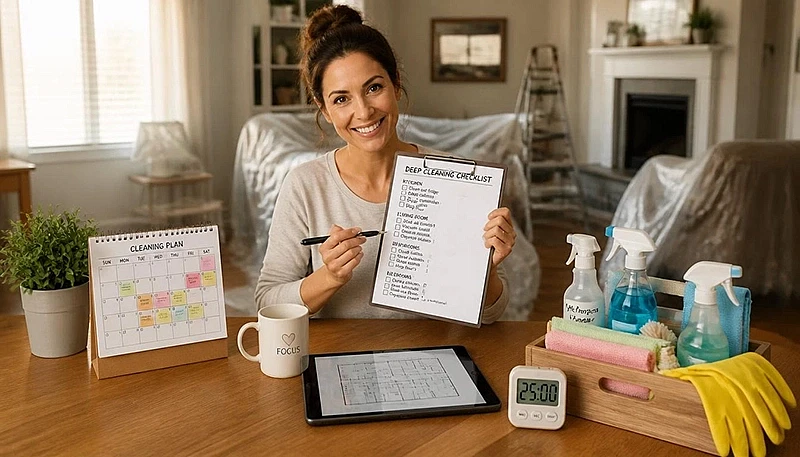
Before you grab any cleaning supplies, take a moment to plan things out. I know it's easy to just jump right in, but believe me, a bit of forethought will save you a lot of headaches down the line.
First, just walk through your place and jot down some notes for each room. What really needs the most work? Where have you been putting things off the longest? Are there any particular spots, build-up, or issues you need to sort out?
After that, figure out your strategy. You could focus on one room at a time, getting it totally done before you move to the next. Or, you might prefer to go through the entire house in stages – like, do all the dusting first, then all the vacuuming, and then wash all the floors.
Many professional cleaners like to stick to the room-by-room method. It feels good to finish a whole room, and you avoid constantly jumping between different jobs and different cleaners. But honestly, just go with whatever feels right for you.
How Long Will It Really Take?
You know, when we talk about really getting a home clean, not just a quick tidy-up but a proper deep clean, we're talking about a significant chunk of time. If it's just you tackling an average-sized place, you should probably set aside a good solid two to three days. It sounds like a lot, I get it, but think about it – you're essentially undoing months of grime and mess all at once. That's not something you rush through. It’s like peeling back layers; you have to be methodical.
Now, if your schedule is a bit tighter, maybe spreading it out across a week makes more sense. You could focus on one or two rooms each day. Which ones? Well, kitchens and bathrooms are usually the big hitters, the places that really soak up dirt and require the most elbow grease. It makes sense to hit those when you're feeling the freshest, maybe early in your cleaning week. That way, you’re not facing the most daunting tasks when you’re already worn out. Doing the living room or bedrooms later, when you might have a bit less energy, feels more manageable.
And seriously, don't be a hero and try to power through the whole thing without stopping. Cleaning is surprisingly physical. You're bending, reaching, scrubbing, and lifting. Your body is going to feel it. Taking regular breaks isn't laziness; it's smart strategy. It gives your knees, your back, and even your hands a chance to recover. You’ll actually get more done, and do a better job, if you pace yourself and don't burn out halfway through. Maybe grab a drink, stretch a bit, and then get back to it.
The Golden Rule: Clean from Top to Bottom
Here's the best tip I can give you for deep cleaning a room: always start at the top and work your way down.
Think about it: you'll want to tackle the ceiling, any ceiling fans, and light fixtures first. After that, move onto the walls and whatever's hanging on them. Then, window treatments and blinds. Next, the surfaces of your furniture, shelves, and any decorative pieces. After that, get to the lower cabinets and baseboards. And finally, the floors.
So, why is this order so crucial? Because when you dust or clean those high spots, all that grime and debris is going to fall. If you've already done the floors, you're just creating more work for yourself by having to clean them all over again. Cleaning top to bottom cuts down on a surprising amount of extra effort.
Part 3: The Tools and Equipment You'll Actually Need
Your Vacuum Cleaner Is Your Best Friend
When it comes to a thorough cleaning, having the right vacuum makes a big difference. You don't need the priciest option out there, but it definitely needs to do a solid job.
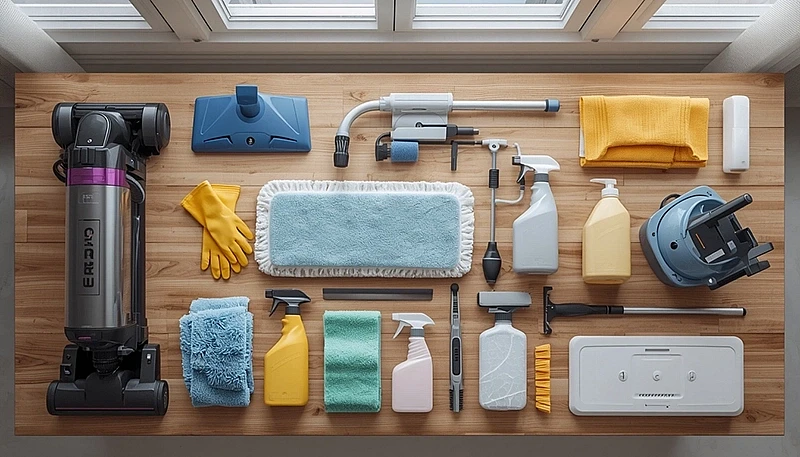
For your main floor areas, an upright or cylinder vacuum is usually the way to go. If allergies are a concern in your household, definitely look for one with HEPA filtration. These filters are really good at catching those tiny particles that can set off allergy symptoms.
Then, having a handheld or stick vacuum around is super handy for those smaller cleanups. They work well on furniture, stairs, and those awkward tight spots where a bigger vacuum is just too much to handle. The cordless ones are a real lifesaver because you can grab them and go without hunting for an outlet.
And if you own a robot vacuum, make sure to use it. It’s not going to handle a deep clean by itself, but keeping it running regularly between those big cleaning sessions will help a lot with maintaining tidiness.
Steam Cleaners - The Unsung Heroes
You know, if you haven't ever given a steam cleaner a try, you're genuinely missing out on a pretty neat way to get things clean. These devices work by using really hot steam, and I mean hot, to break down dirt and kill germs on all sorts of surfaces. The best part? You don't need any harsh chemicals to do it. Think about it – no more spraying down your kitchen counters with something that smells like a science experiment. It’s just steam and a bit of elbow grease, or rather, microfiber pad effort.
They really shine in places like your bathroom, especially on those tile grout lines that always seem to collect gunk. Kitchen backsplashes and countertops? Yep, they handle those too. And if you have sealed hard floors, like laminate or tile, a steam cleaner can make them look surprisingly good. The high heat of the steam is fantastic at breaking down greasy messes and, importantly, it gets rid of a lot of the common bacteria you find in these areas. Then, the attached microfiber pads just sweep all that loosened gunk right up. One of the biggest perks, in my opinion, is how fast things dry. You don't have that lingering dampness you get with mopping, because the steam evaporates so quickly, leaving surfaces nearly dry almost immediately. This is a huge win if you’re constantly battling with kids or pets and need things usable again in a hurry.
Now, if you’re thinking about picking one up, my advice is to pay attention to what attachments come with it. Don't just grab the first one you see. A good steam cleaner will usually come with a variety of tools that really expand what you can do with it. You'll definitely want something like a floor nozzle for those larger areas. But also look for smaller, more focused nozzles. These are great for getting into those tight spots, like the grout between your tiles or other little nooks and crannies where dirt loves to hide. Having a few different brush heads can also be a game-changer, allowing you to scrub away at more stubborn spots without damaging the surface. With the right set of attachments, you can honestly tackle a surprisingly wide range of cleaning tasks around the house, making it a much more versatile tool than you might initially assume.
Mops and Floor Cleaning Systems
When you're cleaning your place, you've got to realize that not all floors are created equal, and neither are the cleaning tools you should be using. Take your hardwood or laminate floors, for instance. They're a bit sensitive to excess moisture, right? You don't want them sitting in puddles of water. That’s why a flat mop, the kind with those washable microfiber pads, is usually your best bet. You get a really good handle on precisely how much water you're applying. It allows you to give the floor just a light, fine mist, which is exactly what those wood-based materials prefer. Too much water and you risk all sorts of issues, like warping or damage to the finish. The microfiber material itself is great at picking up dust and grime with that minimal moisture, leaving your floors clean without drenching them.
Now, if you're dealing with a bigger space, or maybe a floor that’s seen better days and has some tougher grime baked in, you might want to consider a spin mop system. These are pretty handy because they usually come with a bucket that has a built-in wringer. This wringer is key – it lets you squeeze out the mop head to the perfect level of dampness, similar to the flat mop but often with a bit more absorbency for those bigger jobs. Plus, the way the mop head spins, it can add a bit of extra scrubbing power to really get into those ground-in dirt particles. It’s a good step up when you need something a bit more robust than a simple flat mop.
On the more professional side of things, you might see cleaning services using these big, heavy-duty floor scrubbers. These machines are really something else. They typically have rotating brushes that agitate the surface, and at the same time, they have a vacuum system that actively sucks up all the dirty water that’s being loosened. This means the floor is being cleaned and simultaneously dried, preventing that water sitting time. For homes with vast expanses of tile or stone, these can be incredibly effective. But for most of us, just tackling the regular floors in our homes, they're probably more power than you'd ever need. It’s like bringing a tank to a knife fight – effective, yes, but definitely overkill for everyday use unless you have very specific, demanding flooring situations.
The Specialty Tools You Might Not Think Of
There are a few tools that don't get as much attention but can make a huge difference in your cleaning:
Extension dusters are brilliant for reaching high places like ceiling fans, crown molding, and the tops of tall furniture. Without one, you'd need to climb up and down a ladder constantly.
Detail brushes come in all sizes and are perfect for scrubbing grout lines, faucets, and small crevices. A proper set of brushes will let you get into every nook and cranny.
Squeegees aren't just for windows. They're also excellent for cleaning glass shower doors and other large glass surfaces.
Microfiber cloths are absolutely essential. They're far more effective than cotton rags at picking up dust and dirt. And because you can wash and reuse them, they're much more economical in the long run. I recommend getting a selection of different colors so you can designate specific colors for specific tasks—say, yellow for kitchens, blue for bathrooms, and white for glass.
Part 4: Cleaning Products You Can Rely On
All-Purpose Cleaners for Everyday Use
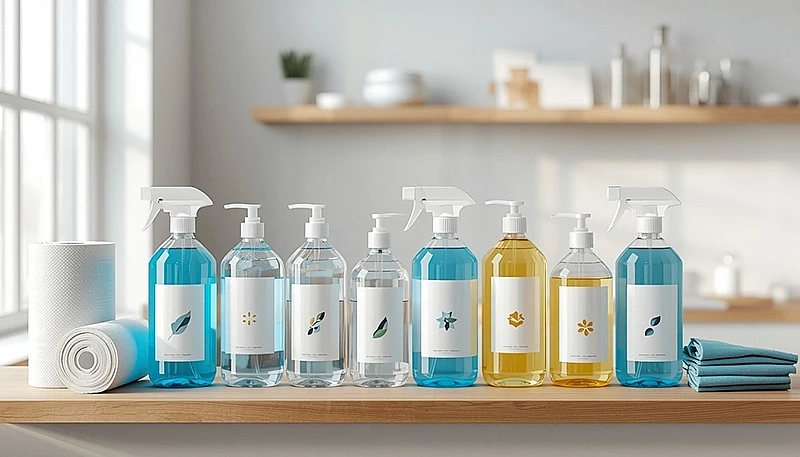
When you're really getting into a deep clean, there's one thing that really should be in everyone's toolkit: a solid all-purpose cleaner. Seriously, these things are workhorses. They can tackle a surprising amount of grime and dirt because they're designed to be safe and effective on so many different kinds of surfaces, as long as they aren't porous. Think about your kitchen counters, the fronts of your cabinets, the exterior of your appliances – even things like doorknobs or light switches. You can usually just spray and wipe, and they’ll take care of a lot of the everyday messes.
Now, when you're picking one out, there's a key detail to keep an eye on: the pH level. You want to find a cleaner that's pH-neutral. Why does that matter? Well, if a cleaner is too acidic or too alkaline, it can actually damage the very surfaces you're trying to clean. Imagine using something harsh on your nice wooden cabinets or your polished granite countertop – you could end up with dull spots, discoloration, or even etching. A pH-neutral formula means the cleaner is balanced. It’s got enough power to lift grease, food spills, and general dust, but it's gentle enough that it won't degrade or harm your materials over time. It’s that sweet spot between being tough on dirt and kind to your home.
Kitchen-Specific Products
You know, the kitchen is one of those places in the house that really throws some curveballs when it comes to cleaning. It's not just about dust or a spill here and there; it’s a whole environment with grease, bits of food, and those lingering cooking smells that just seem to embed themselves everywhere. Trying to keep on top of it can feel like a bit of a battle, frankly.
One of the biggest culprits is grease. Every time you cook, especially if you're frying or sautéing, tiny droplets of oil get vaporized and float up into the air. They don't just disappear; they settle on every surface. Think about your kitchen cabinets, the walls near the stove, and all those appliances. Initially, it might not be very noticeable, but over time, it forms this sticky, almost invisible film. Regular dish soap or all-purpose sprays just don't cut through it effectively. That's where a good degreaser becomes absolutely indispensable. These specialized cleaners are formulated to break down that greasy buildup, dissolving it so you can wipe it away without a ton of scrubbing. It makes a world of difference in how clean the kitchen actually feels.
Then there's the whole stainless steel situation. Many people have stainless steel appliances these days, and while they look sleek, they can be a nightmare to keep looking good. Generic cleaners often just smear the grease around or leave streaks. For stainless steel, you really get the best results with a dedicated polish. These products not only clean but also often leave behind a thin protective layer. This layer helps to repel fingerprints and smudges, which is a lifesaver, and it gives the surfaces that really lovely, consistent shine. It’s like giving your appliances a little spa treatment, making them look their best without constant wiping.
And we can't forget the heavy-duty workhorses: ovens and cooktops. These are often the epicenters of cooking, and they bear the brunt of spills, splatters, and baked-on messes. Ovens, in particular, can become a real challenge with their self-cleaning cycles often not cutting it entirely, or requiring significant pre-cleaning. Standard heavy-duty oven cleaners are incredibly powerful and get the job done, breaking down burnt-on food and grease. However, for those who are mindful of harsh chemicals, there are effective natural alternatives. Making a paste with baking soda and water, letting it sit on the grime, and then scrubbing can yield surprisingly good results. It might take a bit more elbow grease and patience, but it’s a way to tackle those tough spots without introducing strong chemical fumes into your home. It’s about finding what works for your kitchen and your comfort level.
Bathroom-Specific Products
Bathrooms are all about removing mineral deposits, killing bacteria, and tackling mold and mildew.
A good bathroom cleaner should be capable of descaler - removing limescale from fixtures and glass. It should also disinfect surfaces to eliminate bathroom germs.
For grout, you might want a specialized grout cleaner. Grout is porous and traps dirt and mold. A proper cleaner penetrates the pores and lifts out the contamination.
Toilet bowl cleaner works differently from general bathroom cleaner. It needs to be acidic to dissolve the mineral deposits that accumulate in the bowl.
Floor Cleaners for Different Surfaces
The right floor cleaner depends entirely on the type of flooring you have.
Hardwood floors need pH-neutral, non-wax cleaners. Too much water can cause warping, and the wrong chemicals can damage the finish.
Tile and stone floors often benefit from mildly acidic cleaners that help remove mineral deposits. But be careful with stone - some stones are sensitive to acid.
Laminate floors have their own requirements. They need cleaners that won't leave residue or create a film on the surface.
Carpet cleaners often contain enzymes that break down organic stains. They also freshen the carpet and improve the overall appearance.
Natural and Eco-Friendly Alternatives
If you prefer to avoid harsh chemicals, there are plenty of natural alternatives that work incredibly well.
White vinegar is one of the most versatile natural cleaners. It cuts through grease, dissolves mineral deposits, and leaves surfaces clean and streak-free. It's particularly good for glass and windows.
Baking soda is a gentle abrasive that can tackle stubborn stains and neutralize odors. It makes a great paste when mixed with a little water.
Lemon juice naturally dissolves hard water stains and leaves a fresh citrus scent. It also has natural bleaching properties for light stains on fabrics.
Castile soap is a plant-based all-purpose cleaner that works on almost any surface. It's gentle but effective and entirely biodegradable.
Part 5: Kitchen Deep Cleaning - The Heart of Your Home
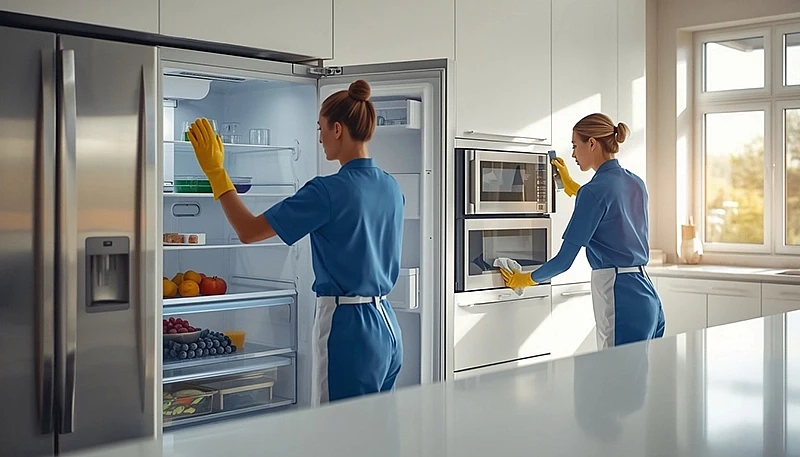
The kitchen is the busiest room in most homes and inevitably the most challenging to clean. This is where you need to be the most thorough because of food safety concerns.
The Kitchen Ceiling and Walls
Start at the top. The cooking process sends grease into the air, and it eventually settles on surfaces, including the ceiling and walls, even if you have a range hood.
Check your range hood and exhaust fan first. Remove the filter and soak it in hot, soapy water while you clean the rest of the area. Use a degreaser on the exterior of the hood and any nearby walls where you can see or feel greasy residue.
Cabinets - Inside and Out
The tops of upper cabinets are notorious for collecting grease and dust. If you've never cleaned them, you might find quite a layer up there. Wipe them down thoroughly.
The exteriors of the cabinets also need attention, especially around the handles where fingers touch them constantly. Degreaser is usually necessary for these areas.
Don't forget the interiors of the cabinets. This is a great opportunity to empty them out, wipe them down, and reorganize everything as you put it back. Check expiration dates on food items while you're at it.
Countertops and Appliances
Clear everything off your countertops. Yes, everything. It's the only way to really clean them properly. Once the surfaces are clear, use the appropriate cleaner for your countertop material. Stone needs pH-neutral products. Laminate is more forgiving.
The outside of your appliances needs attention too. Wipe down your refrigerator, oven, microwave, and dishwasher. Don't forget the handles and control panels, which get touched constantly.
While you're at it, think about doing a proper clean of the interiors too. The microwave can be steam-cleaned quickly by heating a bowl of water with lemon juice inside it. The refrigerator needs everything removed so you can wipe down all the shelves and drawers. Throw away anything that's past its use-by date.
The Oven and Cooktop
These are the heavy-duty jobs. Oven cleaners are strong for a reason - baked-on grease is tough to shift. Follow the instructions carefully and give the product time to work. Natural alternatives like baking soda paste work well but need to be left for several hours.
Remove the stovetop grates and soak them in warm soapy water while you clean the stovetop surface underneath. A scraper tool might be useful for getting off stubborn bits.
The Floor
After you've cleaned everything else, it's time for the floor. Sweep or vacuum thoroughly first to remove all loose dirt and debris. Then mop with a suitable floor cleaner. You might need to use a stiff brush on stubborn spots, especially around where you stand while you're cooking.
Hidden Areas
Finally, don't forget the places that don't get regular attention. Behind and underneath your appliances collects dust, dirt, and sometimes food debris. Pull them out to clean behind them if you can. Check the pantry for items that need to be thrown away.
Part 6: Bathroom Deep Cleaning - Your Sanitization Mission
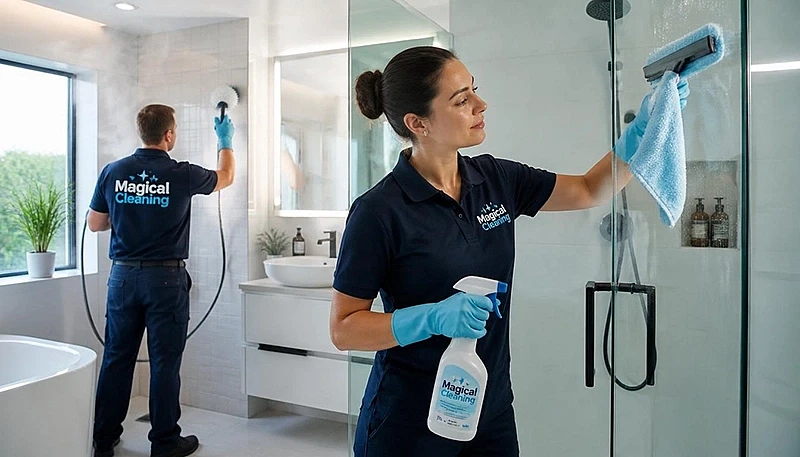
Bathrooms are all about sanitization. This room needs to be thoroughly cleaned because of the bacteria and germs that thrive there.
Start at the Top
Just like every other room, start at the ceiling and work down. Check for any signs of mold or mildew on the ceiling, especially in the corners or around the shower. A bleach-based cleaner can deal with mold if you find any. The bathroom exhaust fan also needs cleaning - the cover comes off easily, and you can vacuum or wipe away the accumulated dust.
The Shower and Tub
The shower and tub are probably the biggest job in the bathroom. Apply cleaner to the tiles and the tub surface and let it sit while you work on other things. This gives the product time to dissolve soap scum and hard water deposits.
When you come back to scrub, use a stiff brush or pad. Pay special attention to grout lines, which trap dirt and can become discolored. For showers with glass doors, use a squeegee and glass cleaner for streak-free results.
While you're dealing with the shower, don't forget the showerhead. If it's clogged with mineral deposits, tie a bag of descaling solution around it and leave it to soak for a few hours.
The Sink and Vanity
Clear everything off your vanity countertop. Then clean the surface thoroughly, paying special attention to the area around the faucet where water can leave mineral deposits.
The sink itself needs a good scrub. If it's stained, you might need a gentle abrasive cleaner. Make sure you clean the overflow opening in the sink too - it can harbor bacteria.
The Toilet
Toilet cleaning is everyone's least favorite job, but it's essential. Apply toilet cleaner around the inside of the bowl and under the rim. Give it time to work - at least fifteen minutes - before scrubbing with a toilet brush. Clean the exterior of the toilet too, including the base and the back. These areas don't get touched often but can collect dust and bacteria.
The Floor
After finishing all the other tasks, sweep and then mop the bathroom floor. Use a cleaner appropriate for your flooring material.
Part 7: Living Areas - Where Life Happens
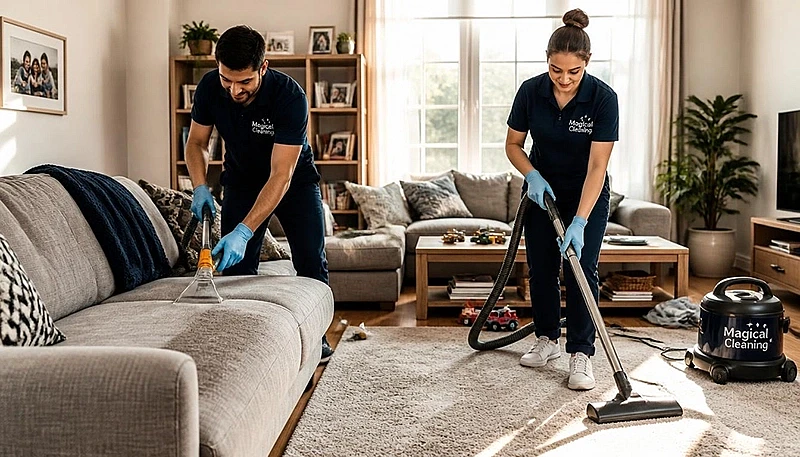
Living rooms and family rooms get a lot of use and are often the most visible parts of the home. A deep clean here makes a huge difference in how your entire house feels.
Ceiling Fans and Light Fixtures
Ceiling fans are dust magnets, especially if they're used regularly. Use an extension duster or climb up with a damp cloth. For glass light fixtures, remove the covers if possible and wash them with dish soap. Replace bulbs if needed.
Walls and Window Treatments
Walls might not look dirty from a distance, but you might be surprised at what you find up close. In rooms where people spend a lot of time, there can be handprints, scuffs, and general grime. A gentle wipe with a damp cloth can brighten up walls significantly. Wash your window treatments - curtains can usually be machine washed, and blinds can be wiped down with a damp cloth.
Furniture and Upholstery
Move your furniture away from the walls so you can clean behind it. This is important - you'll be amazed at the dust and debris that accumulates there.
Vacuum upholstery thoroughly, including the crevices between cushions. If you have fabric covers that can be removed, wash them according to the instructions. Spot-treat any stains. For a really thorough cleaning, consider using an upholstery attachment on your steam cleaner.
Surfaces and Shelves
All horizontal surfaces need attention. Remove everything from shelves and tables, dust them, and then replace items. While you're at it, consider whether you really need everything that's there. Deep cleaning is a good opportunity to declutter.
Electronics
Don't neglect your electronic devices. The screens can be cleaned with specialized screen cleaners. Use a soft cloth and be careful not to apply too much pressure. The vents on computers and game consoles should be vacuumed to remove dust that can cause overheating.
The Floor
Finish with the floor. Vacuum carpets thoroughly, moving small furniture out of the way to reach underneath. If carpets are stained, treat individual stains. Then finish with a cleaner for the whole carpet if needed. For hard floors, sweep and mop.
Part 8: Bedrooms - Your Personal Sanctuary
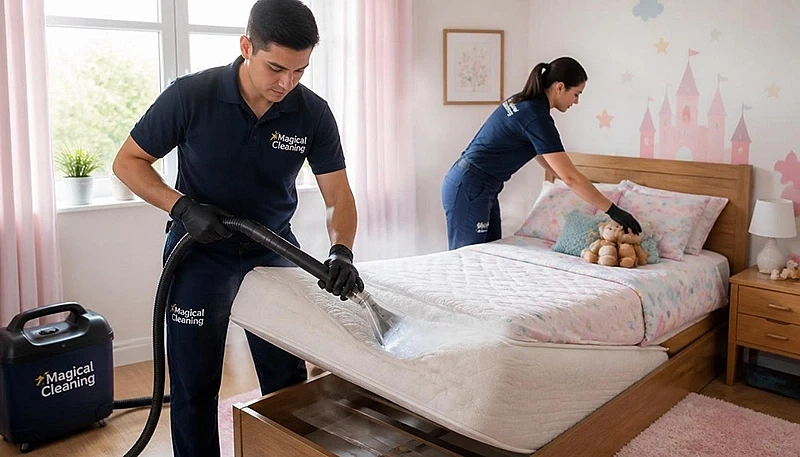
Bedrooms are places for rest and relaxation. They need special attention because of all the fabrics that can trap dust and allergens.
Bedding and Mattresses
Wash all your bedding, including items that you don't wash very often, like mattress pads and duvets. This is also a good time to wash any decorative pillows and bed skirts.
Check your pillows too. If they're old and flat, consider replacing them. Many pillows can be washed, but follow the care instructions carefully.
While the bedding is off, vacuum the mattress. Use a handheld vacuum or the upholstery attachment. Pay special attention to creases and seams where dust mites like to hide.
Furniture and Surfaces
Remove everything from surfaces in your bedroom. Bedside tables, dressers, and other furniture need to be wiped down properly. While things are off surfaces, it's a good opportunity to declutter any unwanted items.
Your closet deserves some attention too. Remove everything from the floor and vacuum the closet interior. Consider going through your clothes and donating anything you no longer wear.
Under the Bed
This is a place that accumulates a lot of dust and often gets completely ignored. Move the bed if you can and vacuum thoroughly underneath. If you use under-bed storage, take everything out and wipe the containers clean before returning them.
Floors and Baseboards
After the rest of the room is done, vacuum the floors thoroughly, including under furniture. Clean the baseboards if they need attention - they can accumulate quite a bit of dust over time. Mop hard floors if your bedroom has them.
Part 9: Windows and Glass Surfaces
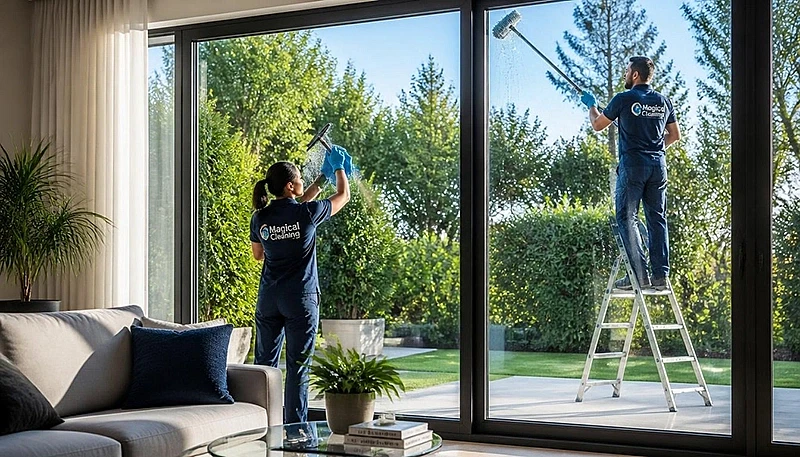
Professional Window Cleaning Tips
Windows can be a challenge, but they make a huge difference to how light and clean a room feels. For the best results, choose a day that isn't too bright and sunny. Direct sunlight causes cleaning solutions to dry too quickly, which can leave marks.
A three-to-one mixture of water and vinegar works brilliantly for windows. Use a squeegee for streak-free results - it takes some practice to get right, but it's worth it. Don't forget to wipe the frames and sills while you're at it.
Mirrors and Glass
Mirrors and glass surfaces in bathrooms and living areas can be cleaned with the same vinegar mixture. The key is to use a clean, lint-free cloth. Microfiber works well. Polish with a dry cloth after cleaning for a streak-free finish.
Part 10: Common Deep Cleaning Mistakes
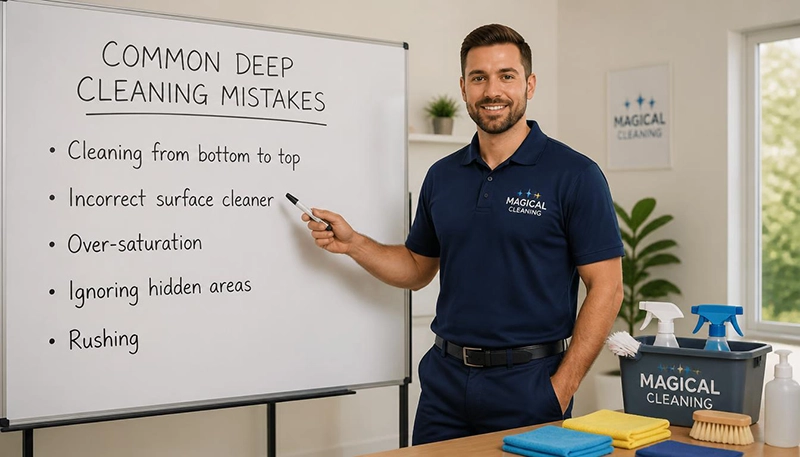
Going from Bottom to Top
I've already mentioned this once, but it's worth repeating. Clean from the top of the room down. If you clean the floor first, then knock dust down from the ceiling onto it, you've just wasted your time.
Using the Wrong Cleaner
Different surfaces need different products. Using the wrong cleaner can damage your home. For example, acidic cleaners will damage natural stone, and abrasive cleaners can scratch many surfaces. Read labels carefully and follow the instructions.
Overwetting Surfaces
Too much water is as bad as the wrong cleaner. Hardwood floors can warp. Upholstery can develop mold deep inside. Walls can suffer moisture damage. Use the minimum water necessary, and dry surfaces thoroughly.
Working Too Fast
Take your time and make sure you're cleaning properly. This is the biggest trap people fall into. Deep cleaning requires patience and attention to detail. The result is worth the time you invest.
Forgetting Maintenance
Deep cleaning is necessary but not something you'll want to do all the time. Schedule it once or twice a year. Between deep cleans, regular maintenance cleaning will keep your home at an acceptable level. But the deep clean is what makes the home truly shine.
Part 11: When to Consider Professional Help
There are times when the best choice is to call in professionals. At Magical Cleaning, we often hear from people who have decided that their time is better spent elsewhere.
When Time Is Short
Deep cleaning takes time, and not everyone has two to three days to dedicate to it. If you're busy with work or family commitments, professional cleaners can do the whole job while you focus on other things.
When You Have Health Concerns
If you're physically unable to do heavy cleaning work, or if you have allergies that make cleaning difficult, professional help makes a lot of sense. We're equipped with tools and products that minimize dust and allergens during cleaning.
When You Want the Best Results
Professional cleaners bring professional experience. We've cleaned thousands of homes and know the best techniques for every surface and situation. We have specialist equipment that makes a real difference to results. And we guarantee our work.
Part 12: A Clean Home for a Cleaner Life

Deep cleaning your home is a significant undertaking, but it's one of the most rewarding things you can do for yourself and your family. A truly clean home reduces stress, improves health, and creates a space that feels genuinely comfortable and welcoming.
At Magical Cleaning, we've seen the difference deep cleaning can make. We're passionate about helping people create beautiful, healthy homes. Whether you decide to tackle the job yourself using the guidance in this article or you'd prefer to leave it to the professionals, we're here to help.
Your home is more than just a place to live. It's where your family relaxes, grows, and makes memories. Keeping it clean is an act of love and care for everyone in it.
Ready to experience the difference a truly clean home can make? We'd love to help. Get in touch with us - we're here to answer your questions, offer advice, and provide professional cleaning services if you need them.
Quick Recap
A deep clean transforms your home. It takes time, effort, and the right tools, but the results are worth it. Here's what you need to remember:
Start with a plan. Clean from the top of each room down to the floor. Use the right products and tools for each surface. Work methodically through every room, paying attention to hidden areas and often-neglected spots.
Most importantly, focus on what matters most. Create a home that's clean, healthy, and welcoming. That's what deep cleaning is all about.
About Magical Cleaning
Magical Cleaning specializes in providing professional residential deep cleaning services. We work with families across the area, helping them maintain clean, healthy, beautiful homes. Our commitment to quality and customer satisfaction has made us the trusted choice for homeowners who want the best for their families.
