
Professional Dry Cleaning of Furniture: A Practical Guide from Magical Cleaning
 Mark Brown2026-06-29
Clean upholstered furniture in your home is not just about how it looks, but also about the smell in your home. A great many people do not pay attention to the condition of their upholstered furniture and do not give its cleaning the attention it deserves. Minor dirt may go unnoticed and build up, whilst attempting to remove visible stains yourself can damage the upholstery and, ultimately, its appearance. Today, we’ll explain in detail which types of dirt are most common and how our specialists successfully clean your upholstery and remove unpleasant odours.
Today we’ve once again invited our friend and colleague Liam, who has agreed to give a detailed yet accessible insight into his work and share some information that will help customers keep their furniture in good condition for many years to come.
Liam talks about common types of stains and how to remove them

Hi I am Liam Byrne and I work as a senior technician over at Magical Cleaning. I have spent a little over ten years now in the professional dry cleaning and upholstery cleaning business. When you do this kind of work for that long you end up seeing exactly how people live with their furniture. My days usually involve driving all across the Southeast of Ireland going between places like Kilkenny Portlaoise Waterford Carlow and Tipperary. Over the years our team has worked on hundreds of different pieces of furniture. We clean standard living room sofas heavily used office chairs delicate armchairs and stubborn mattresses. Every single piece of fabric has its own history and usually a few hidden problems that only become obvious when we start the actual cleaning process.
I wanted to write this today to give you a very honest look at what our job actually involves on a daily basis. I am not here to give you a sales pitch or try to convince you to book a service right this minute. Instead I just want to offer a straightforward explanation of the most common stains we deal with out in the field. People spill coffee wine and food every single day and the immediate reactions are usually the same. I want to walk you through how we actually approach tackling these marks once we arrive at a house or a busy office building.
One thing I really want to focus on is the aftermath of home remedies. More often than not we walk into situations where people have already tried to clean a spill themselves. It is a completely natural reaction to grab a wet cloth or a supermarket spray when something spills on your expensive armchair. But I want to explain why those panic attempts to scrub a stain out usually push the dirt deeper into the upholstery fibres and end up making the whole situation much worse. Understanding how fabric reacts to liquid is half the battle when trying to save a couch. So let us just get right into how this all works.
1. Coffee, Tea, and Other "Wake-Up" Stains
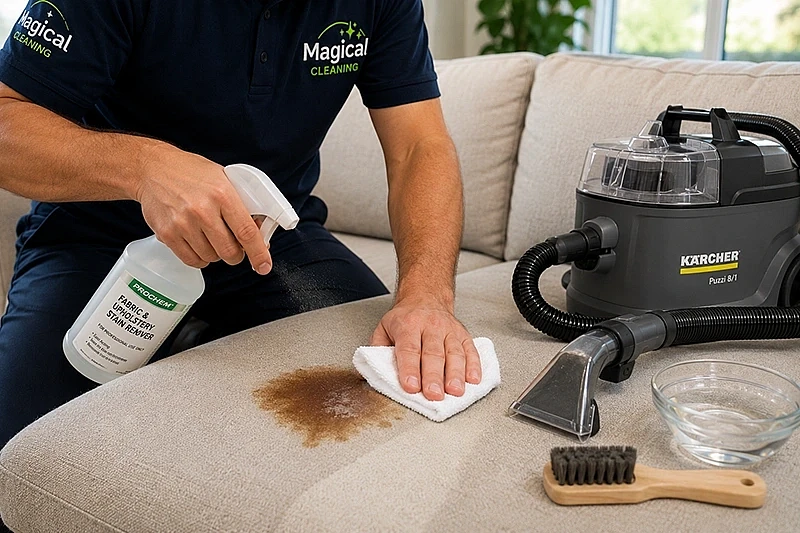
This is probably the most common call we get. You start your morning with a cup of coffee, settle into your favourite armchair, and — one accidental nudge later — a warm brown puddle spreads across the light-coloured upholstery. Sound familiar?
How we remove it
I always tell people that coffee is a lot more than just colored water. It is a mix of tannins, oils, and acids. If you just wipe a spill with a damp rag, you usually push the stain deeper into the fibers and make it a nightmare to get out later.
Whenever I deal with a coffee stain, I start by blotting. You want to use a clean white cloth that does not leave lint behind, and always work from the outside of the spill toward the middle so it does not spread.
After that, I skip the generic all-purpose cleaners under the sink and use a specific tannin remover. You need something actually made to break down coffee compounds. I let it sit for about five to seven minutes, then pull it out using a low-moisture extraction machine.
If the stain has been sitting there for a while, I might go over it with a soft brush first to loosen the dried residue before I treat it. It takes a little patience, but doing it this way lifts the stain out completely and leaves the fabric looking and feeling exactly like it did before.
Why DIY attempts usually fail
Mistake number one: scrubbing. People grab whatever cloth is handy and start rubbing frantically, driving the coffee deeper into the fibres. Mistake number two: using dish soap or general-purpose cleaners. These often contain alkaline ingredients that can alter the fabric's colour or leave behind difficult-to-remove residues. Mistake number three: using hot water. It "sets" proteins and tannins, turning a removable stain into a permanent one.
2. Red Wine: A Velvet Nightmare (and Beyond)
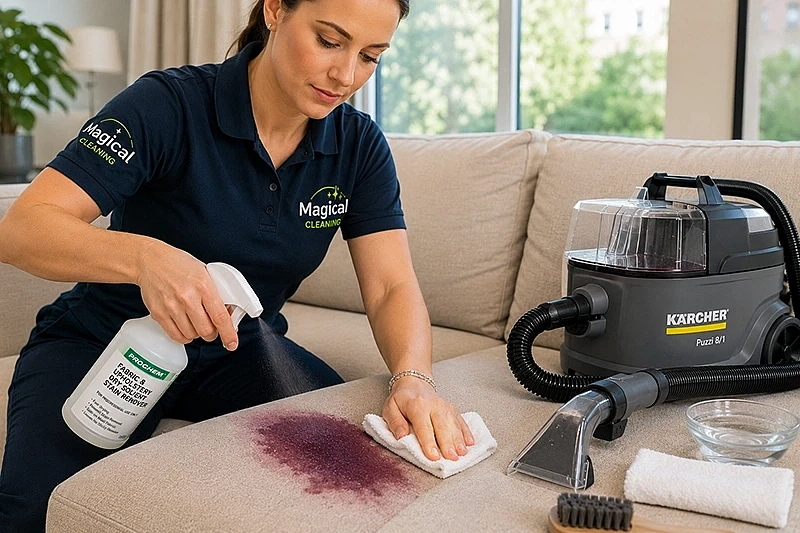
When a glass of red wine tips over on a light colored couch, it creates a situation that really stands apart from your average everyday spill. I have seen a lot of different messes over time, but this specific scenario is always a massive headache. The moment that dark red liquid hits light upholstery, it soaks in quickly and leaves a very obvious stain. This is especially true when we are looking at delicate materials like velvet. Velvet has a specific texture that grabs onto liquids and holds them tight, making the spill spread deep into the fibers almost immediately. Because of how fast the stain sets and how stark the color difference is, this kind of accident is honestly one of the most intense and dramatic types of damage we ever have to deal with. It is a completely different beast compared to a water spill or some dirt on a dark rug. Every single time it happens, it turns into a complete ordeal that requires a lot of careful work to reverse.
How we remove it
I want to share a story about a recent job we took out in Kilkenny. It was one of those calls that makes you realize how much history is tied up in the furniture people keep in their homes. An elderly couple reached out to us in a bit of a panic regarding a very specific and very precious piece of furniture. It was an antique emerald green velvet sofa that had originally belonged to their grandmother. You can imagine the kind of piece this was, the sort of heavy, beautifully made furniture that anchors a room and holds generations of memories.
They had recently hosted a family gathering for a birthday party. With a house full of people, drinks being passed around, and lots of moving parts, accidents are bound to happen. Unfortunately, during the evening, someone managed to knock over a completely full glass of red wine. It spilled directly onto the main seat cushion of this heirloom sofa. By the time we arrived to assess the situation, the stain was massive. It had formed this deep, dark purple blotch right in the middle of the vivid green fabric, and worse, it was already well on its way to drying and setting into the fibers.
Dealing with this kind of situation is always tense because velvet is a notoriously tricky material to clean. You have to approach it with a lot of caution. When people see a stain, their first instinct is usually to grab a cloth and scrub as hard as they can. With velvet, that is the worst thing you can do. The fabric is made up of a raised pile, which gives it that soft texture and catches the light so well. If you scrub it aggressively, you end up crushing those delicate upright fibers. Once that pile is damaged, you are left with a shiny, flattened patch that alters how the fabric reflects light. In the end, a crushed patch of velvet stands out just as poorly and permanently as the dark wine stain itself.
Here's our approach:
- Blotting. No rubbing! We gently absorb excess moisture with clean cloths, working from the edge of the stain toward the centre.
- Specialised dry solvent. We use a product that is safe for delicate fibres. It contains no water, so there's no risk of shrinkage.
- Gentle application. Using a soft-bristle brush, we carefully work the solvent into the stain, allowing it to dissolve the wine pigments.
- Extraction. We remove both the solvent and the dissolved wine using a low-suction upholstery tool.
The result: the velvet looked brand new — no trace of the stain, and the pile remained intact.
Why DIY attempts usually fail
Common mistakes:
- Using water. Moisture can cause the backing of velvet to shrink, distorting the pile.
- Rubbing. Many people try to scrub the stain out, which only spreads it and forces it deeper into the weave.
- Using the wrong stain remover. Products containing bleach or alcohol can discolour the fabric or damage the fibres. Trust me, we've seen the aftermath.
3. Grease Stains: Kitchen Souvenirs and Oily Marks
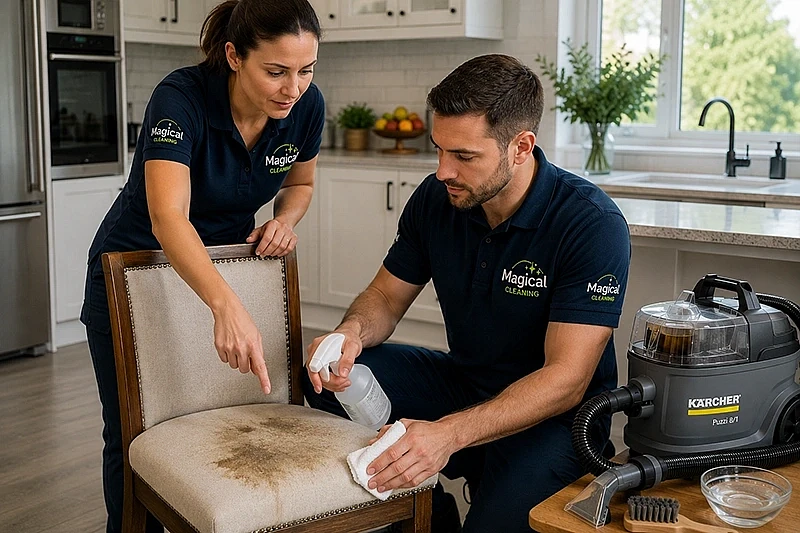
Think about the furniture we use the most every single day. The dining chairs where we sit for meals, the kitchen banquettes where everyone gathers in the morning, and definitely the armrests of that one living room chair you always gravitate toward. Because these spots see so much daily life, they naturally end up catching a lot of stray oil, grease from our hands, and accidental drops of food or sauces. Usually it happens so gradually that you do not notice it right away. But eventually those oils settle deep into the fibers of the upholstery. Once that happens, the greasy spots act like a magnet for everyday airborne dust and dirt in the house. Over a few months or years, those small marks slowly darken and spread across the surface. Before you know it, the actual texture of the material changes, leaving the fabric feeling stiff, discolored, and completely saturated with layers of everyday grime.
How we remove it
We have a secret weapon against grease: an absorbent dry powder. We sprinkle it directly onto the stain, and it draws the oil out of the fibres without wetting the fabric. This is an ideal first step, especially for delicate fabrics that don't respond well to moisture.
After the powder has done its work (usually 15–20 minutes), we vacuum it off thoroughly. If needed, we follow up with a citrus-based solvent — it breaks down the remaining grease and leaves a fresh scent. Finally, we use a dry foam that lifts any remaining particles of dirt, which we then extract.
Why DIY attempts usually fail
Grease is a tricky opponent. Many people reach for water and soap, thinking it will help. But water and oil don't mix — instead of removing the grease, you simply spread it over a larger area, creating a greasy stain that eventually darkens. Another common error is using harsh solvents that can damage synthetic fibres or dissolve the dyes.
Just bear in mind: most grease removers you buy in a regular supermarket are not capable of completely removing a grease stain. Grease always soaks in deeply and penetrates the fabric, and even if you’ve cleaned the surface, it will always reappear over time. That’s why Magical Cleaning uses ‘deep cleaning’ technology that reaches all layers.
4. Pet Urine: The Smell That Won't Go Away
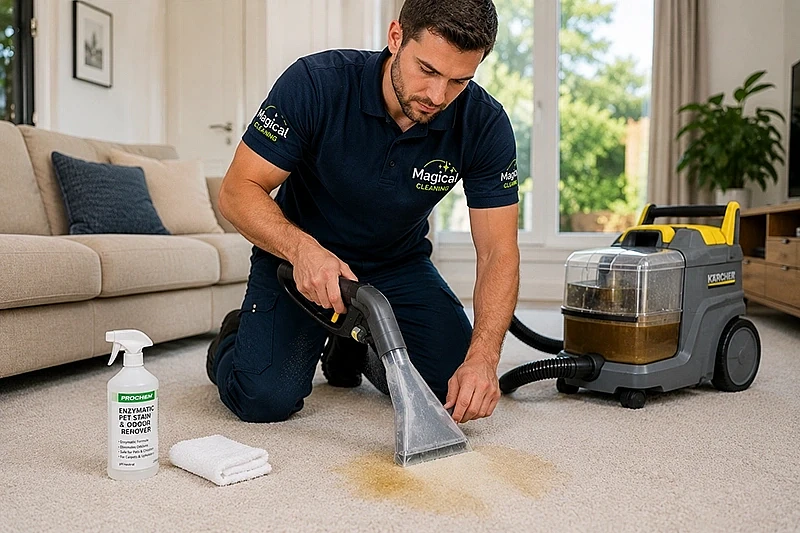
I have to say dealing with this specific issue is usually one of the most frustrating and difficult cleaning jobs we ever come across. People often think it is just a simple surface stain but it is actually much more complicated than that. When your cat or dog decides to mark their territory on your living room sofa the liquid does not just sit on top of the cushion. The ammonia and the uric acid crystals soak straight through the outer upholstery fabric and dive deep into the inner foam and padding underneath. Once it dries down in there those microscopic crystals lock into the spongey materials. That is exactly why you can wipe the surface until it looks brand new but the smell still lingers days later. The real problem is trapped deep inside the couch where normal cleaning sprays just cannot reach.
How we remove it
We don't mask the smell — we destroy it. We use specialised enzymatic cleaners. These solutions contain live enzymes that literally "eat" the uric acid crystals and organic compounds that cause the odour.
Here's the process:
- Pre-treatment. We apply the enzymatic solution generously (but carefully) to the affected area.
- Dwell time. We leave it to work for about 10–15 minutes, allowing the enzymes to break down the stain completely.
- Deep extraction. Using a specialised upholstery tool, we flush and extract the solution, along with the dissolved dirt and salt crystals.
- Final treatment. We apply an odour neutraliser to eliminate any remaining smell.
Why DIY attempts usually fail
The most common mistake is trying to simply "wash away" and "mask" the stain. People use household stain removers or even vinegar, which only masks the smell temporarily. Pet urine contains salt crystals that are not soluble in ordinary water. When you add water, you reactivate them, and the smell becomes stronger. Using chlorine-based products can actually "fix" the odour, making it nearly impossible to remove.
5. Ink, Juice, and "Kids' Creations"
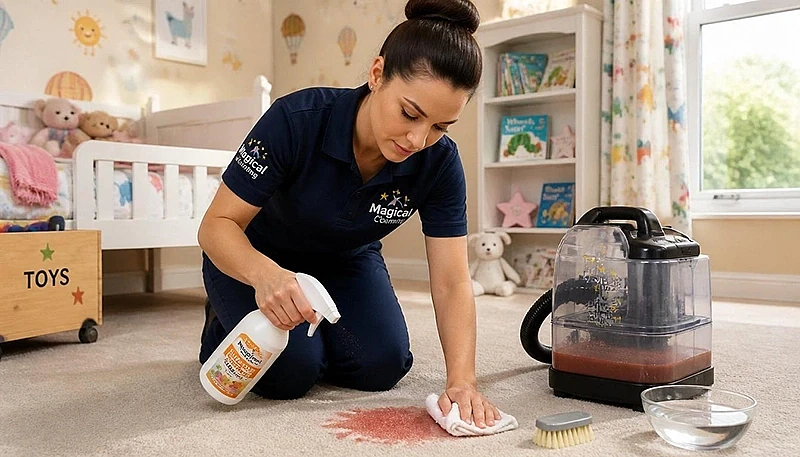
Anyone who has kids knows they operate like relentless little stain factories all day long. It is never just one type of mess. One minute they are dealing with a spilled cup of juice and the next they are somehow covered in a sticky fruit puree. Add a little chocolate into the mix along with some felt-tip pens and you have a real situation. Every single one of those substances inevitably migrates away from the kitchen table. You will always find them smeared across the upholstery of your favorite furniture. The strangest part is the locations they manage to reach. You might find bright ink behind a back cushion or a sticky patch completely underneath a chair armrest where tiny hands have no logical reason to go.
How we remove it
Speed matters, but we have a clear strategy for each type of stain. For fruit and berry juices (which contain strong pigments), we use acid-based removers that neutralise the colour. For ink and paint, we use alcohol-based solvents. Before we apply anything, we always test it on a hidden area to ensure it won't harm the fabric.
The key is understanding the nature of the stain. We don't use one product for everything — it's like medicine: the right treatment for the right problem.
Why DIY attempts usually fail
Children don't wait. Parents grab whatever is closest — soapy wipes, general-purpose stain removers, or cleaners meant for clothing, which are completely unsuitable for upholstery. One of the most common mistakes is using hot water to remove juice or milk. Hot water "cooks" the proteins, and the stain is set permanently. Also, people often try to remove ink with ordinary soap, which only spreads it further.
Why We Don't Use "Everything": Eco-Certified and Safe for Your Family

People ask us one question more than almost anything else. They want to know exactly what kind of products we are bringing into their homes and whether those products are genuinely safe to use around their children and their pets. It is a completely fair thing to ask. When you have kids crawling around the house or a dog that spends most of the day sleeping on the floor and licking its paws, you naturally want to be sure that the surfaces they touch are not covered in heavy residue or harsh chemicals. We pay a lot of attention to this. Every single product we bring with us carries official eco certifications and complies with strict European safety regulations. Those specific European standards are generally known for being quite rigorous about chemical exposure limits and ingredient transparency. But knowing the names of the certifications is just the starting point. The real question people want answered is what those labels actually mean in practice when we are cleaning your living space.
- Safety. Our products do not contain harsh acids, chlorine, or phenols. Even if your child or pet touches the upholstery immediately after we've finished, it won't cause them any harm.
- Hypoallergenic. We use hypoallergenic formulas that are free from common irritants. They won't trigger skin reactions or respiratory issues.
- Eco-friendly. We choose biodegradable products to minimise our impact on the environment.
And here's the most important point: we use dry cleaning methods. We don't saturate your furniture with water. That means it dries quickly, won't shrink, and — critically — won't develop mould or mildew, which can happen when furniture stays damp.
About Magical Cleaning: More Than Just a Clean
When we started in the Southeast of Ireland, we were just a small crew of three people handling local cleaning requests. Over the years, we have steadily grown our operations and now manage a schedule that serves hundreds of regular customers across the region. But expanding our business has not changed our fundamental approach to the daily work. We understand that inviting a cleaning service into your private home or commercial office requires a level of trust.
People want to know that the team arriving at their door actually cares about the physical results of the job. We focus on practical outcomes like improving the comfort of your living space, maintaining a healthier indoor environment by removing trapped debris, and saving you hours of difficult manual labor.
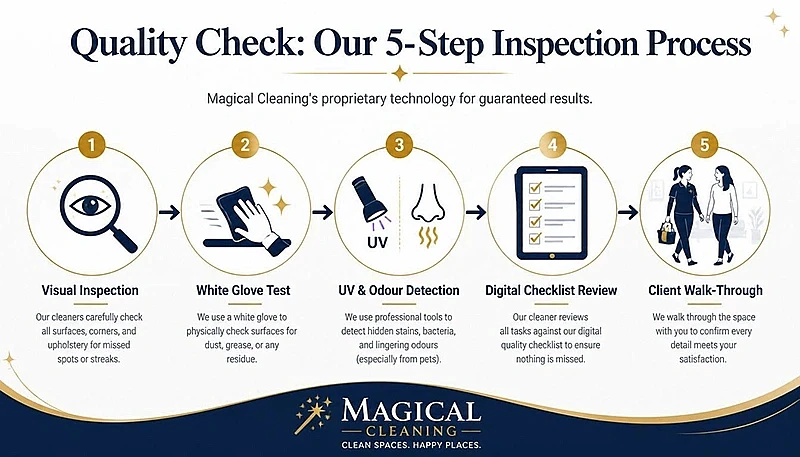
Our daily cleaning process is built on specific physical assessments rather than broad assumptions. We do not use a standard checklist or a single method for every job because every environment and material is completely different. Before any water or cleaning solution is ever applied, our technicians take the time to inspect your furniture closely. They look at the construction of the piece, identify the specific fabric type, and examine the exact nature and age of any stains present.
This preliminary step is necessary because applying the wrong temperature or cleaning agent to delicate upholstery can cause permanent damage or color bleeding. Once we understand exactly what materials we are dealing with, we select the appropriate method.
The machinery we use is chosen for actual mechanical effectiveness. We operate industrial grade vacuums equipped with HEPA filters. These filters are specifically designed to physically capture and trap 99.97 percent of airborne dust, pet dander, and other microscopic allergens, ensuring they are contained within the machine instead of just being exhausted back into the room air. When dealing with deeper soil in fabrics, we use professional extraction machines. These units apply water and cleaning agents deep into the material and then immediately pull them back out with strong continuous suction.
This extraction method lifts the embedded dirt entirely out of the fabric fibers rather than just wiping it across the surface. Technology is only part of the equation, though. It takes the hands on experience our staff has accumulated over thousands of local jobs to know exactly how much pressure and moisture a particular fabric can safely handle without becoming overwet.
Beyond the technical side of the cleaning process, we put a heavy emphasis on how we behave while we are on your property. We know that daily life has to continue while we work. For residential clients, our primary goal is to be as discreet and reliable as possible. We navigate around your family routine, operating quietly and efficiently so you can simply go about your day with minimal disruption to your schedule. The commercial side of our business naturally requires a different kind of operational planning. We offer dedicated out of hours cleaning sessions for busy offices, restaurants, and retail spaces.
Our team will come in after your doors close for the evening, handle the heavy deep cleaning tasks, and ensure that the workspace is completely dry, spotless, and ready for normal use by the time your staff arrives the next morning.
Ultimately, our clients stick with us year after year because they can see and feel consistent results. Buying quality furniture for a living room or outfitting a commercial office building represents a significant financial expense for anyone. We view these items as long term investments that need regular physical maintenance to retain their original appearance and structural integrity.
By applying careful, professional cleaning methods tailored to each specific item, we help extend the usable life of your furniture, ensuring it remains a comfortable, clean, and functional part of your daily environment for many years to come.
When you’re looking after your furniture, you’ll always find professionals who’ll do the job better
I hope this has given you a better understanding of what actually goes into a thorough sofa cleaning. It is easy to assume it is a quick and simple job, but there is a lot happening behind the scenes to get it right. Professional cleaning is not just about having access to expensive soaps or heavy duty machines.
It really comes down to having the specific knowledge of how different fabrics behave and the experience to know which methods will work without causing any harm to the material. We approach every piece of furniture with respect because we know it is an important part of your home, and we are just as focused on your health and the air quality in your living space. Sometimes you end up with a stain that seems impossible to remove, or you might just feel like your home needs a bit of a reset to feel fresh and inviting again.
If you are in that position, we are ready to help out. You do not need to stress over the details or spend your time worrying about how to fix it yourself. All it takes is a quick phone call to us, and we will take care of everything else. We want you to be able to sit back and enjoy your furniture and your home for a long time to come without the hassle.
Magical Cleaning is always available to help homeowners and business owners all across Ireland bring back that sense of real cleanliness and comfort to their spaces.
We can offer you a full range of cleaning and maintenance services for standard flats and houses, as well as for businesses.
