
Cleaning Up After Construction in Ireland: Why Professional Post-Construction Cleaning Matters More Than Most People Realize
 Lawler Mike2026-05-13
Construction and renovation jobs have a way of changing everything about a place, whether it’s a home, an apartment, an office, a shop, or a larger commercial building. You watch it happen in pieces: a coat of fresh paint goes on, new flooring gets laid down, the kitchen starts to look modern again, the bathroom is brought back to life, the electrical system is updated, and a few structural fixes quietly make the whole property feel steadier and newer.
But once the crew packs up and drives off, most property owners run into the same thing almost right away: the work might be finished, yet the site rarely looks “finished.” Dust lingers, scraps get left behind, and piles of building rubble can still be sitting there, like the last page of the project never got turned. So what do you do when the builders are done, but the debris is still there?
Your builders have finished the work, and now it’s time to tidy up after them
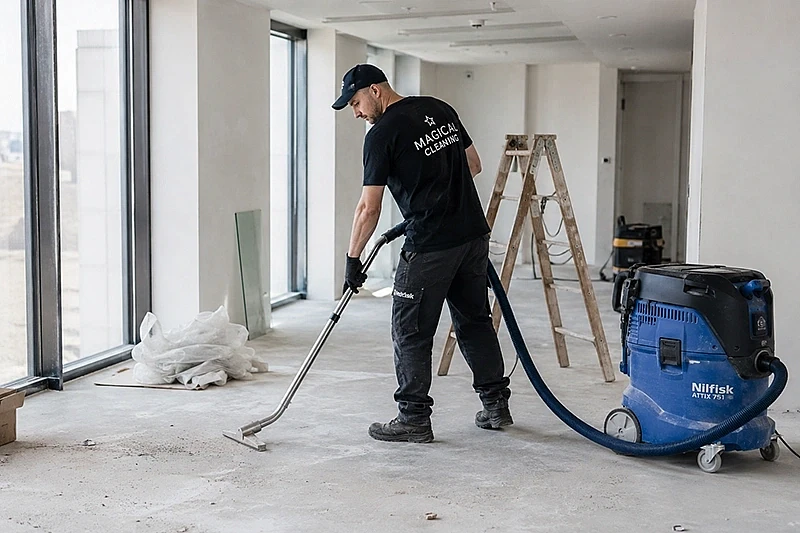
Even a modest renovation tends to leave behind more mess than anyone expects. Fine construction dust drifts through the house and settles into corners that don’t seem reachable. You find adhesive residue clinging to floors and window frames, and paint splashes turning up on skirting boards, sockets, tiles, and glass. Silicone smears, bits of plaster, traces of cement, and discarded packaging have a way of spreading well past the room where the work was done. Many clients only realize the full extent of it after the builders leave, when the place can still feel difficult to live in until a proper, professional clean has been carried out.
That’s the context in which Magical Cleaning’s “Cleaning up after construction” service has been drawing more attention in Kilkenny, Portlaoise, Waterford, Carlow, and Tipperary. More and more property owners have come to see that post-construction cleaning isn’t the same as routine household cleaning. It’s a technical job, and to get it done properly you generally need professional equipment, the right methods, clear safety procedures, and hands-on experience.
The Hidden Reality of Construction Dust
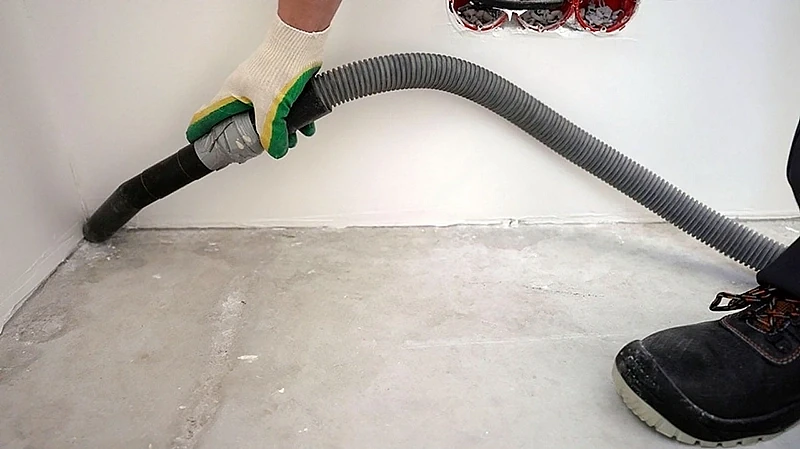
One of the more persistent misconceptions I’ve come across among property owners is the idea that construction dust is just “regular dust, only more of it.” In practice, what’s left behind after a renovation tends to behave very differently, and it can pose greater risks than typical household dirt.
Construction dust can include microscopic fragments of plaster, cement, drywall compound, silica, wood fibers, insulation residue, paint particles, and other job-site materials. Because these particles are so fine and light, they don’t necessarily drop to the nearest surface right away. They linger in the air, sometimes for hours, and over time they drift into rooms and areas well beyond where the work took place.
That’s also why people often find dust returning after they try to clean a renovated space on their own. They run a vacuum, wipe down counters and shelves, feel like they’ve handled it, and then wake up to a fresh film the next day. In most cases, it isn’t mysterious at all: when the wrong tools or methods are used, the fine particles get stirred up and spread around rather than being properly captured and removed.
Things can become more complicated when windows are opened during cleanup. Air movement can carry construction dust outside, where it may settle on neighboring homes, parked cars, balconies, gardens, and nearby buildings. In tighter residential neighborhoods, a rushed or careless post-renovation cleanup can end up affecting surrounding properties, even if that wasn’t anyone’s intention.
Professional cleaning teams approach this differently, using containment and removal methods designed to pull these particles out safely, not just shift them from one surface to the next.
Why Post-Construction Cleaning Can Affect Health
Many people tend to underestimate how much construction-related contamination can affect the body. Still, when post-renovation dust is handled carelessly, exposure can lead to noticeable respiratory irritation and lingering discomfort over time.
I have seen situations where people, without much experience, try to deal with renovation dust using a standard household vacuum or by dry sweeping. The moment they start, the finest particles lift back into the air. Once that happens, they are easy to inhale, and they can aggravate the nose, throat, lungs, and eyes. For anyone living with allergies, asthma, or general respiratory sensitivity, the risk is even higher.
A frequent misstep during самостоятельная уборка after construction is taking a dry brush or broom to heavy dust buildup. It may look productive because the visible layer shifts, but it often sends a thin haze of contamination across the room instead. Those fine particles then work their way into vents and settle into fabrics, curtains, carpets, mattresses, and upholstered furniture.
Physical exhaustion becomes another issue sooner than people expect. Renovation cleanup asks much more of you than ordinary housekeeping. To get construction residue off floors, windows, walls, kitchens, bathrooms, and the corners most people forget, you can end up spending hours—sometimes several days—pushing through repetitive, demanding work. Many property owners start with the goal of saving money by doing it all themselves, and then find the process draining, frustrating, and, in certain moments, not as safe as it first seemed.
Magical Cleaning often hears from clients who began with independent cleaning, then paused once they realized the level of contamination was beyond what typical household tools and routines could reasonably handle.
The Most Common Types of Post-Construction Contamination
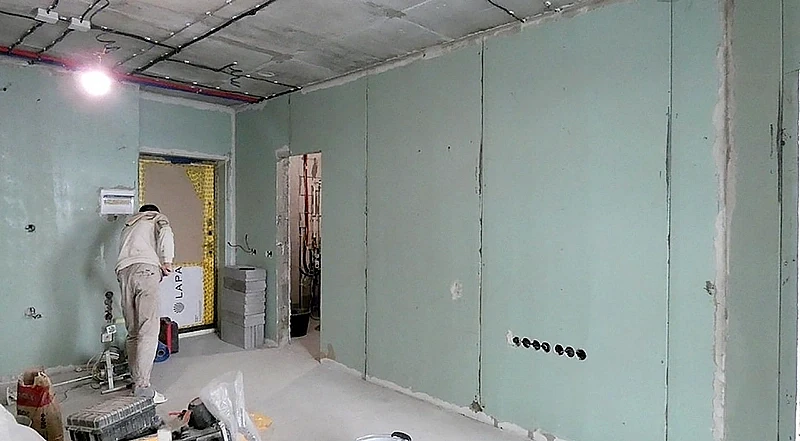
Every construction or renovation job tends to leave its own mix of residue behind, shaped by what materials were used and what kind of work took place. In the middle of that, professional cleaners have to pause, look closely, and name what they’re dealing with, because one surface might tolerate a certain method while another will mark, stain, or dull if treated the same way.
Fine plaster dust is the type that causes the most trouble. It drifts everywhere as if it has no weight at all, then works its way into tight seams, corners, textured finishes, and even ventilation areas. A typical household vacuum usually can’t trap those tiny particles reliably, and in some cases it ends up pushing part of the dust back into the air.
Paint residue shows up just as often. After the work crews have gone, there are usually small splatters left on floors, window frames, tiles, switches, sockets, and glass. If someone tries to remove it the wrong way, the paint can spread into a larger smear, or it can leave lasting damage on a more delicate material.
Silicone and adhesive residue tends to become the main headache in kitchens and bathrooms after fittings and installation. It bonds tightly to the surface, and it doesn’t respond to ordinary detergent and a quick wipe. When removal is handled poorly, it’s common to see scratched glass, scuffed polished areas, or marks on newer kitchen finishes.
Cement haze and grout residue are the kind of leftovers that remain after tiling. Many homeowners, thinking they’re speeding things up, reach for harsh chemicals or abrasive sponges, and that’s often when the tile surface gets damaged or a protective finish is worn away.
Wood dust from flooring work or carpentry doesn’t behave quite like plaster dust. It can still travel through a space easily, but it also has a habit of working into fabrics and upholstery, where it’s harder to extract than people expect.
On top of all that, there are the smaller but persistent issues: protective plastic films that need to come off cleanly, construction tape that leaves glue behind, packaging material that gets scattered during installation, and general renovation debris. Taken together, they add another layer of work, because everything has to be removed with care so the newly installed surfaces aren’t damaged in the process.
Why Household Cleaning Products Often Make the Situation Worse
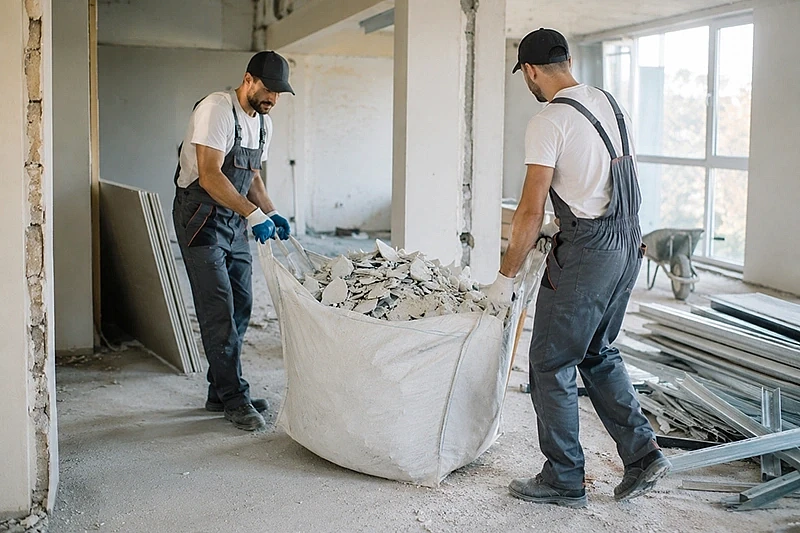
One of the most common missteps property owners make after a renovation is assuming that standard supermarket cleaning products will be adequate for post-construction cleaning.
In practice, most household cleaners are built for everyday domestic messes like kitchen grease, bathroom buildup, or routine dust, whereas construction-related contamination behaves in a very different way.
For instance, when too much moisture is applied directly to fine plaster dust, it often turns into a paste-like film that can be even harder to lift. Using the wrong chemicals can also lead to unwanted reactions with fresh paint, silicone, adhesives, or newer flooring finishes.
Another recurring problem is cross-contamination. People frequently rely on the same cloths, mops, and basic household tools from start to finish. Rather than removing the residue, they end up carrying dust from one room into the next.
In response to these realities, Magical Cleaning approaches post-construction work with professional-grade equipment and products chosen specifically for renovation environments. Their process is laid out with care, so contamination is less likely to be redistributed while the cleaning is underway.
Why Professional Equipment Changes Everything
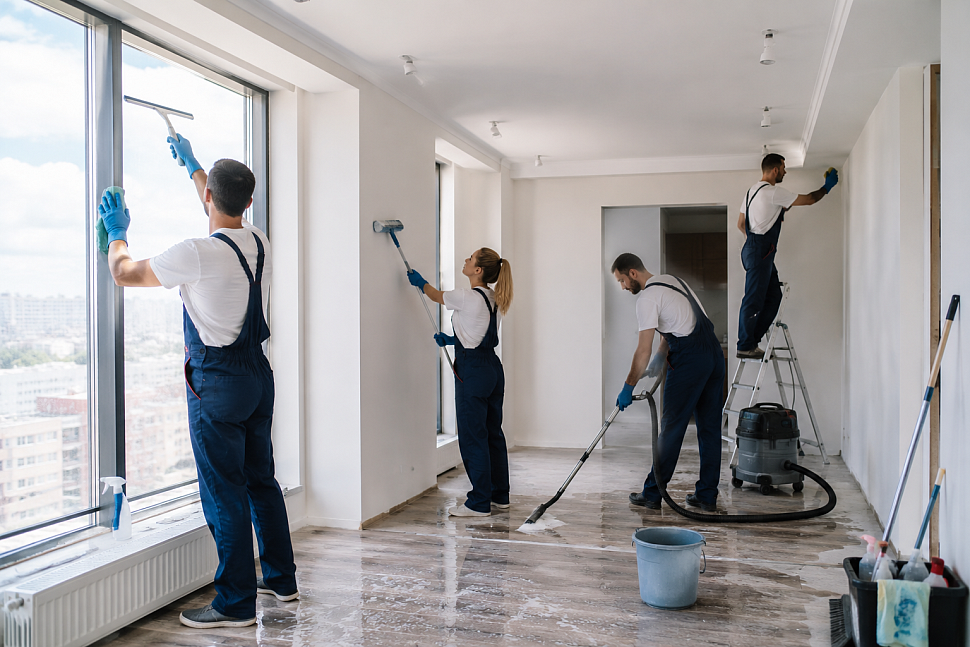
The gap between routine cleaning and professional post-construction work tends to show up right away in the tools people bring through the door.
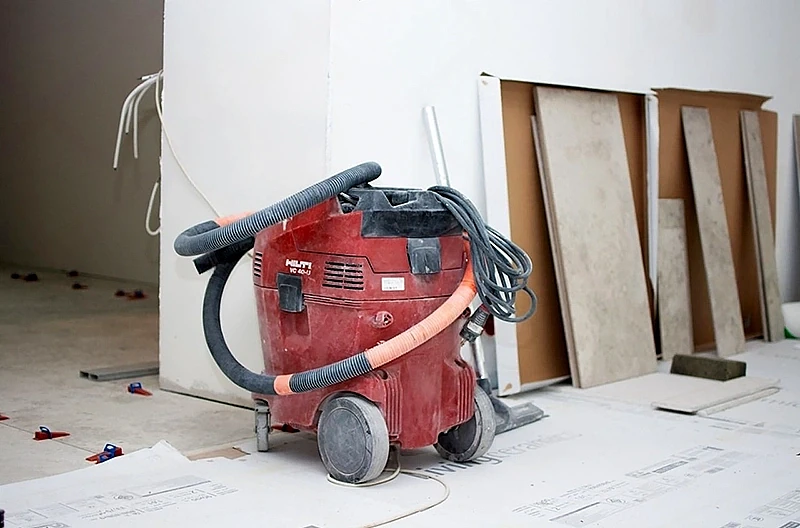
In post-renovation settings, industrial vacuum systems with advanced filtration are used to capture microscopic dust that a typical household vacuum is not built to handle safely. The machines are made for heavy, continuous use, especially in spaces where fine dust is everywhere and settles faster than you can see.
Professional microfiber setups matter just as much. When the microfiber is high grade, it holds onto fine particles instead of skating them across a countertop or a floor. With more controlled techniques, this helps limit how much dust gets kicked back into the air while the cleaning is underway.
Then there are the purpose-built tools: specialized scrapers, non-abrasive attachments, extraction systems, extension equipment, and professional window-cleaning systems. With trained hands, these make it possible to remove residue and contamination from delicate surfaces without creating new damage in the process.
Magical Cleaning teams also tend to plan their gear before they arrive. After hearing what kind of renovation work was completed, they select the cleaning solutions, filtration options, and tools that match the type of debris and dust they expect to encounter.
That kind of preparation usually saves time on site and leads to more consistent results.
Cleaning Kitchens After Renovation
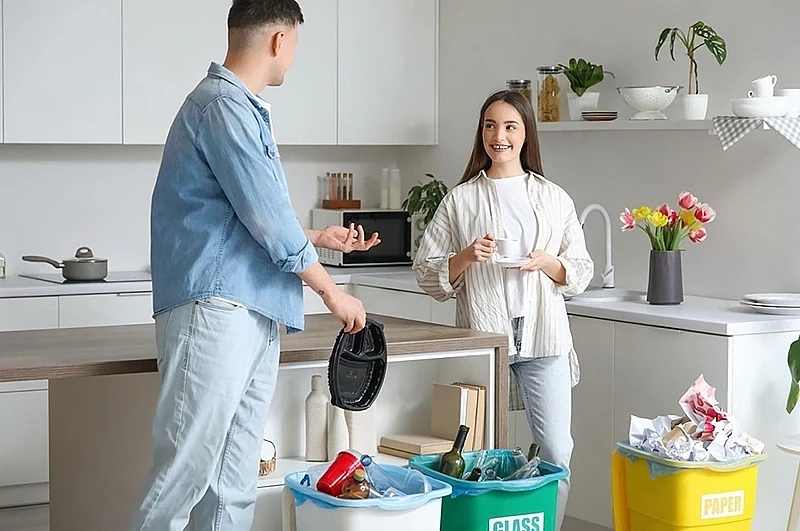
Kitchens tend to be some of the most technically challenging areas to clean once construction is finished, largely because they combine delicate materials with a mix of complicated surfaces.
In many modern kitchens, you’ll find polished cabinetry alongside built-in appliances, stone countertops, glass panels, metal hardware, and various textured finishes. Fine construction dust doesn’t just sit on top of things; it works its way into hinges, vents, drawer runners, and the narrow gaps around appliances.
When the wrong approach is used, glossy cabinet fronts can end up permanently scratched, and stainless steel appliances may be left with streaks or residue that remains obvious under normal light.
Professional cleaners usually handle a renovated kitchen in a deliberate sequence. They start by removing dry debris with industrial-grade vacuum systems, and only bring in moisture once that initial contamination is under control. From there, they choose cleaning agents based on the specific materials that have been installed.
They peel away protective films with care so the finish underneath isn’t compromised. Any adhesive left behind is dealt with as its own task rather than being smeared across surfaces. Ventilation components, light fixtures, outlets, handles, and the areas most people don’t immediately see are all cleaned with close attention.
In the end, the goal isn’t limited to making the space look clean; it’s about returning the kitchen to a condition where it’s safe, functional, and ready to use.
Bathrooms and Moisture-Sensitive Areas
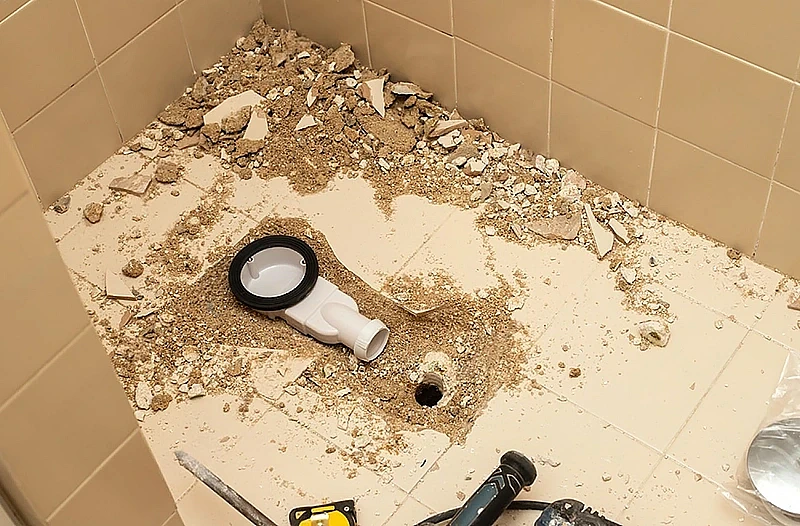
Bathrooms tend to bring their own set of post-construction cleaning complications. After the work is finished, there’s often tile residue left behind, fresh silicone seams that haven’t fully settled, new plumbing that has been handled and tested, mirrors that pick up every fingerprint, and surfaces that don’t tolerate excess moisture.
Grout haze is a common example, and it can look fine at first, only to show up later when the lighting shifts. Along with that, it’s normal to find water spotting, fine cement dust, and the occasional smear where silicone was applied or wiped.
Clients sometimes try to take care of the cleanup themselves and, without meaning to, cause damage. It usually happens when abrasive brushes are used on delicate finishes, or when acidic cleaners are applied to stone or polished materials that aren’t meant to handle them.
A professional cleaning team approaches bathrooms with the assumption that every material behaves differently. Glass and mirrors need one kind of handling, tile another, chrome fittings have their own sensitivities, and stone surfaces often require a more cautious approach when it comes to both chemicals and moisture.
Magical Cleaning focuses on bringing a renovated bathroom back to a clean, finished state while taking care not to compromise sensitive finishes or newly installed materials.
Windows After Construction Work
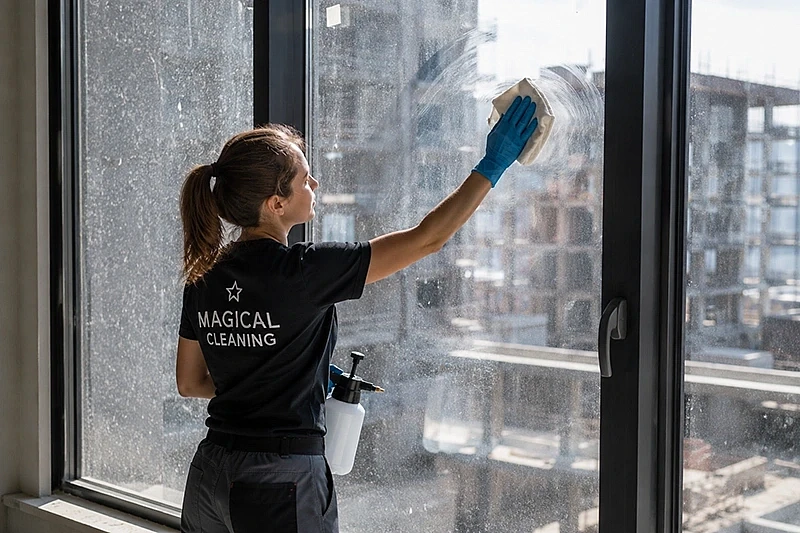
Post-construction window cleaning tends to be one of the most overlooked parts of a renovation clean, even though it often causes the most trouble later.
Dust from the build seems to settle on glass almost immediately. By the time the crew has packed up, it is common to find specks of paint, leftover silicone, adhesive smears, small cement splashes, and that stubborn glue from protective film still clinging to the windows.
When someone tries to clear that mess the wrong way, the glass can end up with scratches that do not come out.
A lot of property owners reach for standard blades or abrasive tools and only realize afterward that they have marked the surface. Others lean into it too hard, especially when the residue has already dried and feels like it needs force to shift.
A proper post-renovation window clean calls for methods that are designed to avoid damage, along with the right tools for the job. The glass is checked closely before any work starts, and each type of residue is dealt with on its own so grit or hardened material is not dragged across the pane.
Magical Cleaning extends the work beyond the glass itself, taking care of frames, edges, tracks, and nearby surfaces, with the aim of keeping dust from continuing to circulate once the project is finished.
Floors and Surface Protection
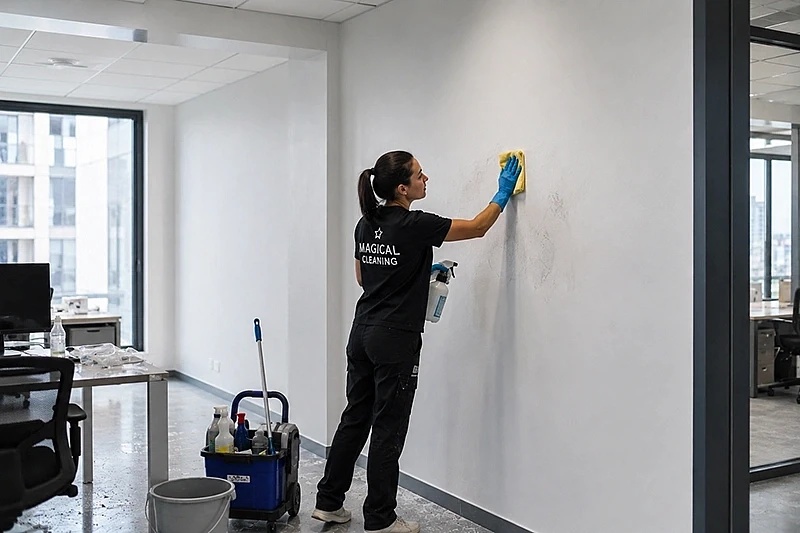
New flooring tends to be one of the costliest parts of a renovation. In the same breath, it is also one of the areas most likely to get damaged when cleaning is handled the wrong way.
Fine construction dust doesn’t just sit there; it behaves like an abrasive. If people walk across a floor that still has particles on it, and no proper cleaning steps are taken first, those grains can leave tiny scratches in wood, laminate, vinyl, and other polished finishes.
There is another risk as well. When harsh cleaning chemicals are used too early or without checking what the surface can tolerate, they may strip protective coatings or leave discoloration behind.
In professional post-construction cleaning, the crew typically starts by taking a close look at the floor before any treatment begins. They remove dust and debris in a controlled way first, then choose the cleaning approach that matches the specific flooring material that was installed.
Handled with that level of care, the process helps safeguard what the client has already invested in the renovation.
Commercial Properties and Construction Cleaning
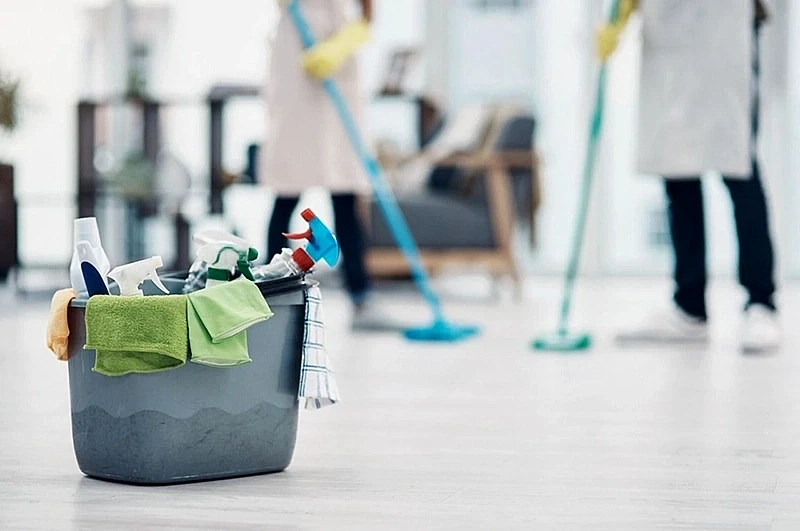
Across southeast Ireland, the need for professional post-construction cleaning has been picking up speed, and it is no longer limited to private homes. It is showing up just as strongly in commercial properties, where renovation schedules tend to move fast and expectations are high.
Restaurants, offices, retail units, tourist apartments, and hotels often find themselves renovating while still trying to keep the business running, all under tight deadlines to reopen. In those situations, owners have little room for delays, and they cannot risk extended downtime simply because the final cleaning has not been properly completed.
Commercial sites also tend to leave behind more debris and residue, and the work is rarely straightforward. The materials are often varied, the layouts can be complicated, and the level of contamination is typically higher than what you would see in a domestic setting.
Magical Cleaning supports commercial clients across Kilkenny, Portlaoise, Waterford, Carlow, and Tipperary, helping them get renovated spaces ready for reopening in a timely, professional way.
That work can involve wide floor areas, large amounts of glass, office desks and workstations, ventilation sections, kitchens, bathrooms, and the customer-facing areas where the standard of cleanliness is closely tied to how the business is perceived.
Why Experience Matters in Post-Construction Cleaning
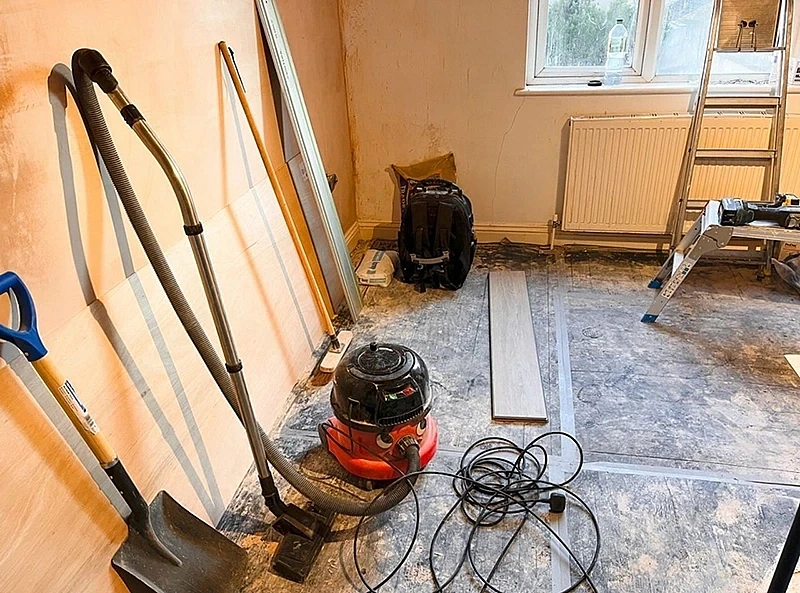
Many cleaning companies promote post-construction cleaning, but in day-to-day practice, the outcome often depends on whether the crew has real professional experience.
I have seen what happens when a cleaner without that background focuses on what’s easy to spot, clearing away the obvious debris while fine dust still lingers in vents, corners, and other less visible areas. In other cases, the problem isn’t what gets missed, but what gets harmed—newly installed finishes can be dulled, stained, or scratched when the wrong chemicals or overly abrasive methods are used.
Professional post-construction cleaning requires understanding:
- surface materials,
- contamination behavior,
- filtration systems,
- moisture control,
- safety procedures,
- chemical compatibility,
- dust containment methods.
Magical Cleaning has spent time on the ground, building practical know-how while working through many different renovation settings in both homes and commercial sites across southeast Ireland.
In day-to-day work, the team treats each project as its own case. They adjust the cleaning approach based on how extensive the renovation is, what kind of residue or contamination is present, which materials are in play, and what the client needs most.
Patrick Doyle on a particularly tricky case of clearing up after builders
My name is Patrick Doyle, and I have worked with Magical Cleaning for years. We have handled many post-construction clean-ups across southeast Ireland, but one job in Kilkenny stayed with me because it showed how “finished” sites can still hide serious contamination.
It was a traditional pub that had just completed a major interior renovation. The owners updated seating, lighting, wood finishes, paintwork, and customer bathrooms ahead of the tourist season. The builders left on time, and at first glance the place looked clean: no large debris, new furniture in place, and floors that seemed polished under the lights.
But post-construction cleaning isn’t judged by first impressions.
When we arrived early, the sunlight through the front windows made the real problem obvious: fine dust hanging in the air. That usually means the contamination level is much higher than what you can see from standing height.
The owner looked surprised when we explained that the “clean” look can be misleading. Builders often tidy enough for presentation, but microscopic dust remains throughout the space. In a pub, that matters because particles settle into ventilation, fabrics, storage areas, and anywhere food or drink is handled.
We checked the pub room by room. The worst build-up was above the main seating area, around ventilation runs and lighting. Plaster dust and fine wood particles had collected on pipes, beams, and electrical fittings, mostly hidden by the lighting and impossible to spot from the floor. If the pub reopened like that, music vibration, foot traffic, and airflow would keep pushing dust back into the air for weeks.
The wooden floor had its own issue. The builders had vacuumed, but dust was still trapped between boards. Each step brought a faint white line back along the seams. Repeated mopping would have made it worse by driving the dust deeper and leaving residue behind.
At the bar counter we found hardened adhesive left from protective films, stuck to metal and glass. Earlier attempts to clean it had already smeared residue across polished surfaces, the kind of thing that becomes obvious under evening lighting.
This is where sequence and experience matter.
We started by containing the worst areas and using industrial filtration vacuums built for post-construction dust, not domestic machines that can recirculate particles. Within an hour, the air felt noticeably better, and even the owner remarked that the place smelled fresher, even though we used chemicals sparingly.
The decorative lighting over the central seating took patience. The installers had drilled into old plaster and timber, and dust had settled inside exposed fixtures. Cleaning them carelessly could damage components or scratch the glass. We detailed each fixture with microfiber tools and low-moisture methods, slowly restoring them without harm.
The customer bathrooms needed close work as well. Silicone residue, grout haze, and dust clung to sinks, mirrors, chrome, and tile joints. Under normal light they looked fine, but inspection lights showed contamination across most reflective surfaces.
We also found dust embedded in the upholstered booths along the walls. They hadn’t been fully protected during the renovation, and the fabric held the particles deep in the fibers. Left alone, customers sitting down would release dust into the air night after night. We used extraction equipment and upholstery methods designed to remove embedded debris without fading color or roughening the texture.
Glass surfaces had their own risk. Fine paint flecks and plaster residue had bonded to windows and partitions, and removing them the wrong way could leave permanent scratches. We used post-construction glass tools and controlled techniques to clear the contamination safely.
By late evening, the change was clear. The pub didn’t just look better; it felt different. The air was lighter, surfaces read clean under the lights, and the lingering “renovation” smell was gone.
Later, the owner told us customers said the pub felt completely fresh compared with other newly refurbished places. People may not notice every detail, but they do notice when a space feels comfortable and properly finished.
For our team, that Kilkenny job reinforced a simple point: after construction, what you can’t see is often the real problem. A site can look ready while still holding dust, residue, and fine debris that keeps affecting the environment long after the builders leave.
That’s why we treat post-renovation cleaning as a technical stage, not a cosmetic one, because it determines whether the property is genuinely ready for people to use.
Protecting Families and Pets

One of the key responsibilities in professional post-construction cleaning is making sure the space is genuinely safe for people to return to after a renovation.
It’s common for families to move back into a newly updated home as soon as the builders are done. Even then, fine construction dust can linger in places you don’t notice at first, and it may spread through the property when the cleanup hasn’t been completed properly.
Children and pets tend to react more quickly to airborne particles and leftover chemical residue. That’s why a thorough professional clean aims to lower those risks by removing the contamination rather than simply covering it up for the short term.
Magical Cleaning approaches this with care, choosing products that make sense for a residential setting and putting the emphasis on safely lifting out contaminants, instead of relying on heavy chemical use.
Why More Clients Choose Professional Cleaning After Renovation
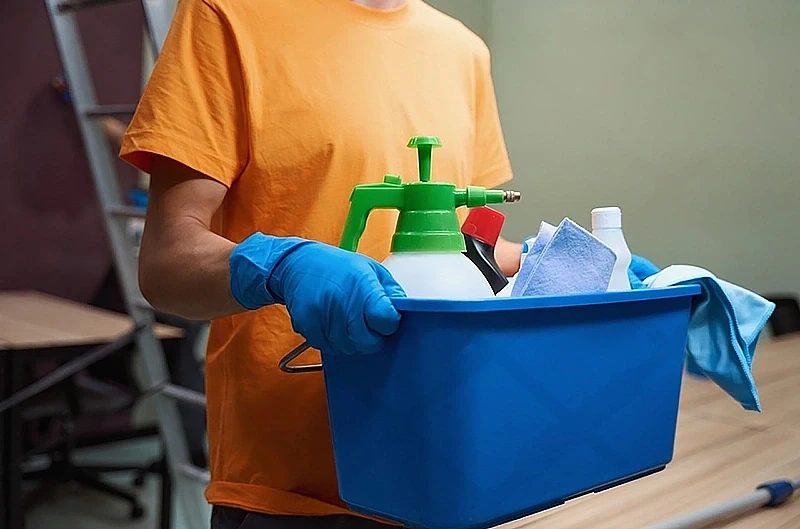
Over time, many property owners come to see that bringing in a professional team for post-construction cleaning is less about indulgence and more about treating it as the practical last step of the renovation.
They run the numbers, too. When glass gets scratched, floors are marked, surfaces end up stained, or furniture is left in poor condition because it was cleaned the wrong way, the repair or replacement costs can quickly outpace what it would have cost to hire professionals from the outset.
What often matters just as much is the day-to-day reality of it. A professional clean can take a heavy load off, cutting down on the hours, the physical strain, and the stress that tends to pile up right at the end of a project.
In Kilkenny, Portlaoise, Waterford, Carlow, and Tipperary, more clients have started turning to Magical Cleaning, partly because they recognize that post-construction work calls for specialist skills and equipment that typical household cleaning is unlikely to cover.
How Magical Cleaning Approaches Every Project
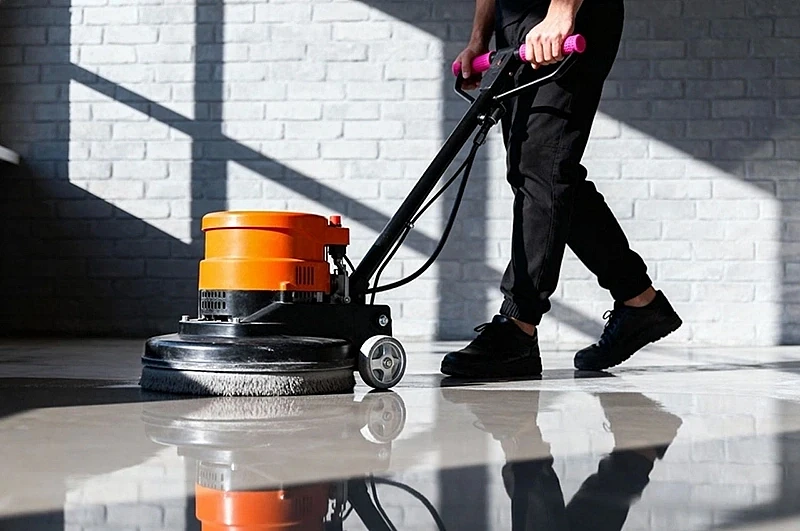
Before the work begins, the team at Magical Cleaning takes time to assess the property, walking through the space to see what condition it is in and how much construction residue is present. With that overview in hand, they can arrive prepared, choosing the right equipment, setting up appropriate filtration, and bringing cleaning solutions that match what they are likely to face.
They run the cleaning in a structured way so they do not end up stirring up debris and spreading it back into areas that were already treated. Dry dust and loose particles are handled first, carefully and safely, before they move on to more detailed work on surfaces. If there are delicate finishes or materials, those are kept protected while the rest of the process continues around them.
Each room is treated on its own terms, with the approach adjusted to the types of surfaces inside and the level of contamination that has settled there.
The intention is not just to make the place look clean in photos or pass a quick inspection. What they are working toward is a space that feels properly restored: comfortable to live or work in, safer to use, with better air quality and no lingering grime that affects how the property functions day to day.
Post-construction cleaning is widely considered one of the more technically demanding forms of professional cleaning. Fine dust, paint splashes, adhesive residue, traces of silicone, grout haze, and leftover renovation debris can create issues that go well beyond what ordinary household tools and methods tend to handle well.
When people try to manage this type of cleanup on their own without the right setup, it can sometimes lead to costly mistakes—scratching premium surfaces, pushing dust into adjacent rooms, or creating ongoing health concerns when particles remain airborne.
A professional post-construction clean typically depends on industrial-grade equipment, higher-performance filtration, purpose-built products, and the practical judgment that comes from working around sensitive materials and stubborn construction contamination.
That is why many clients across Kilkenny, Portlaoise, Waterford, Carlow, and Tipperary choose to bring in Magical Cleaning for what often feels like the final, decisive step of a renovation.
A renovated property is expected to feel fresh and healthy, safe to occupy, and genuinely finished—not quietly coated in invisible dust and residue that lingers in corners and on surfaces. Professional cleaning helps ensure the renovation results not only look complete, but also feel complete once people step back inside.
Find out more about our cleaning services, including commercial premises and upholstery cleaning, which you can book with Magical Cleaning
